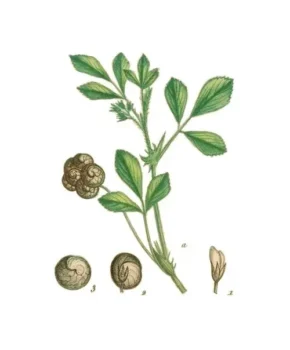
Medicago italica: The Mediterranean Medick You’ve Probably Never Heard Of
If you’ve stumbled across the name Medicago italica in your plant research, you might be scratching your head wondering what exactly this little-known species is all about. Sometimes called by its synonyms Medicago obscura or Medicago tornata, this Mediterranean native is a member of the legume family that’s more likely to pop up in botanical texts than garden centers.
What Exactly Is Medicago italica?
Medicago italica is a small annual plant hailing from the Mediterranean region, particularly areas around Italy (hence the italica in its name). Like its more famous cousin, alfalfa (Medicago sativa), this plant belongs to the medick genus and shares the family’s characteristic ability to fix nitrogen in the soil through its root nodules.
This species produces small yellow flowers typical of the pea family and has the clover-like leaves you’d expect from a Medicago. While it may not win any beauty contests, it has that understated charm that comes with many wildflower species.
Where Does It Come From?
As a Mediterranean native, Medicago italica naturally occurs in the warm, dry climates of southern Europe and surrounding regions. It’s adapted to the kind of environment where summers are hot and dry, and winters are mild and moist.
Should You Grow It in Your Garden?
Here’s where things get interesting. Since Medicago italica isn’t native to North America, you might want to pause before adding it to your garden wish list. While we don’t have clear information about whether it’s invasive or problematic, the general principle of when in doubt, go native usually serves gardeners well.
That said, if you’re specifically interested in this plant for research purposes or you’re creating a Mediterranean-themed garden, it can serve as:
- A nitrogen-fixing ground cover
- A modest pollinator plant for small bees and beneficial insects
- An addition to naturalized or wild garden areas
- Part of a low-maintenance, drought-tolerant planting scheme
Better Native Alternatives
Before you go hunting for Medicago italica seeds, consider these native alternatives that offer similar benefits:
- Native clovers and vetches in your region
- Wild lupines (Lupinus species)
- Native Astragalus species
- Regional wildflowers that support local pollinators
If You Do Decide to Grow It
Should you choose to grow Medicago italica, here’s what you need to know:
Growing Conditions
- Sunlight: Full sun to partial shade
- Soil: Well-draining soil; tolerates poor soils
- Water: Drought tolerant once established
- Climate: Best suited for USDA zones 7-10
Planting and Care Tips
As an annual, Medicago italica is relatively straightforward to grow:
- Sow seeds directly in spring after the last frost
- Barely cover seeds with soil – they need light to germinate
- Water gently until established, then let natural rainfall take over
- Expect the plant to self-seed if conditions are right
- Minimal fertilizing needed thanks to its nitrogen-fixing abilities
The Bottom Line
Medicago italica is one of those plants that’s more interesting from a botanical perspective than a gardening one. While it’s not necessarily harmful, there are plenty of native options that will better serve both your garden and local wildlife. If you’re drawn to the idea of nitrogen-fixing legumes, consider exploring the native alternatives in your area first.
Remember, the most sustainable and beneficial gardens are those that work with local ecosystems rather than against them. Your local native plant society can be a great resource for finding regional alternatives that offer similar benefits while supporting the wildlife that has evolved alongside them.