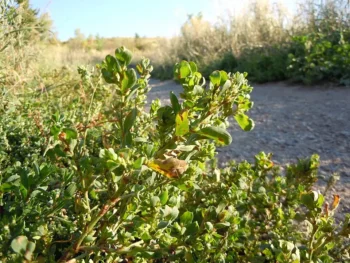
Leathery Knotweed: A Tough Little Native for Challenging Garden Spots
If you’re looking for a no-fuss native plant that can handle whatever your garden throws at it, let me introduce you to leathery knotweed (Polygonum achoreum). This scrappy little annual might not win any beauty contests, but it’s got character and resilience that make it a surprisingly valuable addition to the right garden spaces.
What is Leathery Knotweed?
Leathery knotweed is an annual forb—basically a non-woody herbaceous plant that completes its entire life cycle in one growing season. Don’t let its humble appearance fool you; this native plant is a true North American original with an impressive range that spans from Alaska all the way down through much of the continental United States.
As a member of the buckwheat family, leathery knotweed produces tiny, inconspicuous flowers and has a compact, low-growing form. Its fine-textured foliage and ability to thrive in challenging conditions make it particularly interesting for gardeners dealing with difficult sites.
Where Does It Grow Naturally?
This adaptable native has one of the most extensive ranges you’ll find in North American plants. Leathery knotweed naturally occurs across Canada in Alberta, British Columbia, Manitoba, New Brunswick, Nova Scotia, Ontario, Quebec, Saskatchewan, Yukon, and the Northwest Territories. In the United States, you can find it growing wild in Alaska and throughout numerous states including Colorado, Connecticut, Idaho, Illinois, Indiana, Iowa, Kansas, Maine, Michigan, Minnesota, Missouri, Montana, Nebraska, New York, North Dakota, Ohio, Oregon, Pennsylvania, South Dakota, Vermont, West Virginia, Wisconsin, and Wyoming.
- Species observed
- No observations
Why Consider Planting Leathery Knotweed?
While leathery knotweed might not be the showstopper in your garden, it serves several important purposes that make it worth considering:
- Soil stabilization: Its root system helps prevent erosion on slopes or disturbed sites
- Low maintenance: Once established, it requires virtually no care
- Drought tolerance: Perfect for water-wise gardening approaches
- Native wildlife support: Small flowers attract beneficial insects and tiny pollinators
- Naturalizing ability: Self-seeds readily to fill in bare spots
Best Uses in the Garden
Leathery knotweed shines in specific garden situations where other plants might struggle:
- Rock gardens: Its compact size and tough nature make it ideal for tucking between stones
- Naturalized areas: Perfect for prairie restorations or wildflower meadows
- Disturbed site rehabilitation: Excellent pioneer species for challenging locations
- Ground cover: Forms a fine-textured carpet in appropriate settings
- Native plant gardens: Adds authentic local flora to indigenous landscapes
Growing Conditions and Care
One of the best things about leathery knotweed is how adaptable it is to different growing conditions. This flexibility comes from its wetland status, which varies by region—it can handle both wet and dry conditions depending on your location.
Light requirements: Full sun to partial shade
Soil preferences: Adaptable to various soil types, including poor soils
Water needs: Drought tolerant once established, but can handle moisture
USDA Hardiness Zones: 2-7
Maintenance level: Very low
Planting and Establishment Tips
Getting leathery knotweed started in your garden is refreshingly straightforward:
- Direct seeding: Sow seeds directly in spring after the last frost
- Soil preparation: Minimal soil prep needed—this plant handles poor conditions well
- Spacing: Allow natural spacing as plants will self-regulate
- Watering: Water lightly until germination, then reduce as plants establish
- Ongoing care: Virtually none required once established
Things to Keep in Mind
While leathery knotweed is a native plant with many benefits, there are a few considerations for gardeners:
As an annual, it will complete its life cycle in one season, but it readily self-seeds, so you can expect it to return year after year if conditions are right. Its appearance is quite modest—this isn’t a plant you choose for dramatic visual impact, but rather for its ecological benefits and problem-solving abilities.
The small flowers do provide nectar for tiny pollinators and beneficial insects, making it a valuable addition to pollinator-friendly gardens even if the blooms aren’t showy.
The Bottom Line
Leathery knotweed might not be the star of your garden show, but it’s definitely a reliable supporting actor. If you have challenging sites that need stabilization, want to support native pollinators, or are creating naturalized areas, this tough little native deserves consideration. Its wide natural range means it’s likely well-adapted to your local conditions, and its low-maintenance nature makes it perfect for gardeners who appreciate plants that take care of themselves.
Sometimes the most valuable plants in our gardens are the ones that work quietly behind the scenes, and leathery knotweed fits that description perfectly.