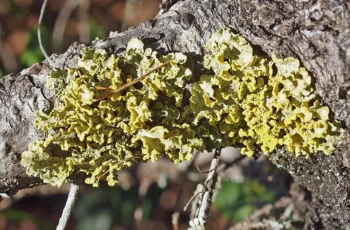
Vulpicida pinastri: The Forest’s Natural Air Quality Monitor
Have you ever noticed crusty, grayish-green patches growing on the bark of pine and fir trees during your woodland walks? You might have been looking at Vulpicida pinastri, a fascinating lichen that’s been quietly doing important work in North American forests for centuries. While you can’t plant this remarkable organism in your garden like a typical flower or shrub, understanding what it is and what it tells us about our environment is pretty amazing.
What Exactly Is Vulpicida pinastri?
Let’s start with the basics: Vulpicida pinastri isn’t actually a plant at all! It’s a lichen, which is essentially a partnership between a fungus and algae (or sometimes cyanobacteria) living together in perfect harmony. Think of it as nature’s original roommate situation – the fungus provides structure and protection, while the algae produces food through photosynthesis.
This particular lichen is native to North America and has quite the family history. You might see it referred to by its former names, Cetraria pinastri or Tuckermannopsis pinastri, if you’re diving into older field guides or scientific literature.
Where You’ll Find This Forest Dweller
Vulpicida pinastri has made itself at home across the boreal and temperate regions of North America. You’ll typically spot it growing on the bark of coniferous trees – particularly pines and firs, which explains the pinastri part of its name (meaning of pines).
How to Identify Vulpicida pinastri
Spotting this lichen in the wild is like finding nature’s own artwork. Here’s what to look for:
- Crusty, somewhat flaky appearance that forms patches on tree bark
- Color ranges from yellowish-green to gray-green
- Distinctive lobed or irregular margins around the edges
- Grows primarily on the bark of coniferous trees
- Forms relatively thin, closely attached patches rather than leafy or branching structures
Is It Beneficial to Have Around?
Absolutely! While you can’t cultivate Vulpicida pinastri in your garden, having it naturally present in nearby forests is actually a wonderful sign. Lichens are incredibly sensitive to air pollution, particularly sulfur dioxide and nitrogen compounds. Think of them as nature’s canaries in the coal mine – when lichens like Vulpicida pinastri are thriving, it usually means the air quality is pretty good.
This makes them valuable indicators of ecosystem health. If you’re noticing healthy lichen populations on trees in your area, it’s a positive sign that your local environment is relatively clean and well-balanced.
The Garden Connection
While you can’t plant lichens like traditional garden plants, you can create conditions that might encourage them to show up naturally if you have mature trees on your property. The best thing you can do is:
- Maintain healthy, mature coniferous trees
- Avoid using chemical treatments on tree bark
- Keep air quality around your property as clean as possible
- Be patient – lichens grow very slowly and may take years to establish
A Living Partnership Worth Protecting
Vulpicida pinastri represents something pretty special in the natural world – a successful long-term partnership that benefits both parties involved. While it might not add colorful blooms to your landscape design, it’s doing important work as an environmental indicator and contributing to the complex web of forest ecosystems.
Next time you’re walking through a coniferous forest, take a moment to appreciate these unassuming patches on tree bark. They’re not just hitchhiking on trees – they’re active participants in keeping our forest ecosystems healthy and serving as silent guardians of air quality. Pretty impressive for something most people walk right past without a second glance!