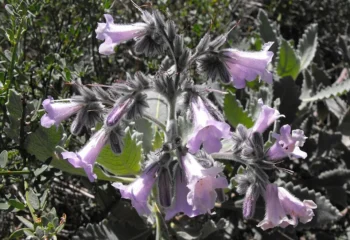
Thickleaf Yerba Santa: A Rare California Native Worth Growing Responsibly
If you’re looking to add a distinctive, drought-tolerant shrub to your California native garden, thickleaf yerba santa (Eriodictyon crassifolium) might just be the perfect candidate. This evergreen beauty brings year-round structure and seasonal blooms to landscapes while supporting local wildlife—but there’s an important conservation story you should know before planting.
Meet the Thickleaf Yerba Santa
Thickleaf yerba santa is a perennial shrub that typically grows as a multi-stemmed woody plant, usually staying under 13 to 16 feet in height. What makes this plant truly special are its thick, leathery leaves that feel almost sticky to the touch—a clever adaptation that helps the plant conserve moisture in California’s dry climate.
This native beauty is endemic to California, meaning it grows naturally nowhere else in the world. You’ll find wild populations scattered throughout the chaparral and woodland areas of southern California’s mountains, where it has evolved over thousands of years to thrive in the region’s Mediterranean climate.
- Species observed
- No observations
Why Consider Thickleaf Yerba Santa for Your Garden?
There are plenty of reasons to fall in love with this California native:
- Drought tolerance: Once established, it requires minimal water—perfect for water-wise gardening
- Pollinator magnet: Spring to early summer brings clusters of white to pale purple tubular flowers that attract native bees and butterflies
- Evergreen structure: Provides year-round interest with its distinctive dark green, resinous foliage
- Low maintenance: Thrives with minimal care once established
- Erosion control: Excellent for stabilizing slopes and hillsides
A Word About Conservation
Here’s where things get important: thickleaf yerba santa has a Global Conservation Status of S3, which means it’s considered vulnerable. With only 21 to 100 known occurrences and between 3,000 to 10,000 individuals in the wild, this plant faces potential threats to its survival.
Does this mean you shouldn’t grow it? Not at all! In fact, growing native plants in gardens can help support conservation efforts. However, it does mean you should be extra careful about sourcing. Always purchase from reputable native plant nurseries that propagate their own plants rather than collecting from wild populations.
Perfect Garden Settings
Thickleaf yerba santa shines in several garden types:
- Native California gardens
- Mediterranean-style landscapes
- Xeriscape and drought-tolerant gardens
- Wildlife habitat gardens
- Slope stabilization projects
It works beautifully as a mid-story shrub, providing structure between taller trees and lower groundcovers. The plant’s unique texture and form make it an excellent focal point or accent plant in native plant compositions.
Growing Conditions and Care
One of the best things about thickleaf yerba santa is how well-adapted it is to California’s challenging growing conditions:
Climate: Hardy in USDA zones 8-10, making it suitable for most of California’s inhabited areas
Sun requirements: Thrives in full sun to partial shade
Soil preferences: Loves well-draining soils and actually prefers rocky or sandy conditions over rich, heavy soils
Water needs: Drought tolerant once established, but appreciates regular water during its first year
Planting and Care Tips
Getting your thickleaf yerba santa off to a good start is straightforward:
- Timing: Plant in fall to give roots time to establish before summer heat
- First year care: Water regularly to help establishment, then gradually reduce frequency
- Ongoing maintenance: Very low maintenance once established—minimal summer water needed
- Pruning: Light pruning after flowering can help maintain shape, but it’s not necessary
- Natural spread: May self-seed in favorable conditions
Supporting Wildlife
Beyond its garden appeal, thickleaf yerba santa plays an important role in supporting California’s native wildlife. The flowers provide nectar for various pollinators, including native bees and butterflies, helping maintain the complex web of relationships that make healthy ecosystems function.
The Bottom Line
Thickleaf yerba santa offers gardeners a chance to grow something truly special—a rare California endemic that brings unique beauty and ecological value to the landscape. While its vulnerable conservation status means we need to be thoughtful about sourcing, this remarkable shrub deserves a place in more California gardens. Just remember to buy from reputable nurseries, and you’ll be supporting both conservation and the beauty of your own outdoor space.
Ready to add this distinctive native to your garden? Your local pollinators—and California’s natural heritage—will thank you for it.