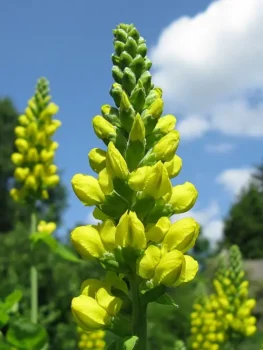
Aaron’s Rod: A Bright Yellow Native Perennial for Your Garden
If you’re looking for a cheerful, low-maintenance native perennial that brings sunshine to your garden, Aaron’s rod (Thermopsis villosa) might be just what you need. This delightful member of the pea family produces spikes of bright yellow flowers that look remarkably like lupines, making it a fantastic choice for gardeners who want that classic cottage garden look with native plant benefits.
What Exactly is Aaron’s Rod?
Aaron’s rod is a perennial forb – basically a non-woody plant that comes back year after year. Unlike shrubs or trees, it doesn’t develop woody stems, instead dying back to the ground each winter and emerging fresh in spring. You might also see it listed under its old botanical name, Thermopsis caroliniana, but the current accepted name is Thermopsis villosa.
Where Does Aaron’s Rod Come From?
This native beauty calls the eastern United States home, with populations scattered across 16 states from Maine down to Alabama. You’ll find it naturally growing throughout much of the Appalachian region, including states like North Carolina, Virginia, West Virginia, Tennessee, and Kentucky, as well as extending into New England and the Mid-Atlantic states.
- Species observed
- No observations
Why Plant Aaron’s Rod in Your Garden?
There are several compelling reasons to consider adding this native perennial to your landscape:
- Pollinator magnet: The bright yellow flower spikes are irresistible to bees, butterflies, and other beneficial insects
- Low maintenance: Once established, it’s quite drought tolerant and requires minimal care
- Native plant benefits: Supports local ecosystems and wildlife better than non-native alternatives
- Beautiful blooms: The lupine-like flower spikes add vertical interest and sunny color to spring and early summer gardens
- Naturalized look: Perfect for cottage gardens, woodland settings, and naturalized landscapes
Growing Conditions and Care
Aaron’s rod is surprisingly adaptable and easy to grow, making it perfect for both novice and experienced gardeners. Here’s what this native perennial prefers:
- Sunlight: Partial shade to full sun (though it appreciates some afternoon shade in hotter climates)
- Soil: Well-draining soil that’s acidic to neutral
- Water: Moderate moisture when establishing, then quite drought tolerant
- Hardiness: Thrives in USDA zones 5-8
Planting and Care Tips
Getting Aaron’s rod established in your garden is straightforward:
- Plant in spring or fall when temperatures are moderate
- Space plants about 18-24 inches apart to allow for mature spread
- Water regularly during the first growing season to help establish roots
- Once established, minimal watering is needed except during extended droughts
- Cut back flower stalks after blooming to encourage tidier growth, or leave them if you want seeds for natural spreading
- Little to no fertilizer needed – like many natives, it thrives in average soil conditions
Design Ideas and Garden Uses
Aaron’s rod works beautifully in several garden settings:
- Woodland gardens: Plant along shaded paths or woodland edges for natural-looking drifts
- Native plant gardens: Combine with other southeastern natives like wild bergamot and purple coneflower
- Cottage gardens: Use as a lupine alternative that’s better suited to local conditions
- Background planting: Its upright growth makes it perfect for the back of perennial borders
A Word About Conservation
While Aaron’s rod isn’t considered critically endangered, it’s not exactly common either. Its conservation status is somewhat uncertain, which means it’s always best to source plants from reputable native plant nurseries rather than collecting from the wild. By growing it in our gardens, we’re actually helping to preserve this lovely native species.
The Bottom Line
Aaron’s rod is one of those wonderful native plants that proves you don’t have to sacrifice beauty for ecological benefits. With its cheerful yellow flowers, easy-care nature, and value to pollinators, it’s a win-win addition to any garden that can accommodate its growing requirements. If you’re in zones 5-8 and looking for a reliable native perennial with spring appeal, Aaron’s rod definitely deserves a spot on your planting list.