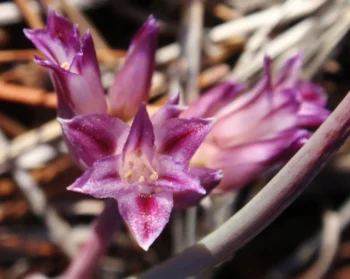
Abrams’ Allium: A Delicate California Native Worth Growing
If you’re looking to add some understated elegance to your California native garden, meet Abrams’ allium (Allium abramsii). This charming little bulb might not be as flashy as its ornamental cousins, but it brings a special kind of grace to naturalistic landscapes with its delicate flowers and grass-like foliage.
What Makes Abrams’ Allium Special
Abrams’ allium is a true California native, found naturally in the Sierra Nevada foothills and Central Valley regions. As a perennial forb that grows from underground bulbs, it follows the classic Mediterranean climate rhythm – emerging in fall and winter, blooming in spring, then retreating underground to wait out the hot, dry summers.
This lovely native is currently found only in California, making it a special addition for gardeners wanting to support local biodiversity.
- Species observed
- No observations
A Conservation Note
Before we dive into growing tips, it’s worth noting that Abrams’ allium has a conservation status that suggests it’s somewhat uncommon in the wild. If you’re interested in adding this plant to your garden, make sure to source bulbs responsibly from reputable native plant nurseries rather than collecting from wild populations. By growing it in our gardens, we can actually help support its conservation!
Garden Appeal and Design Uses
Don’t expect bold, showy displays from Abrams’ allium – its beauty lies in subtlety. The plant produces slender stems topped with small umbels of white to pale pink flowers, rising 1-3 feet above narrow, grass-like leaves. It’s the kind of plant that rewards close observation and fits beautifully into naturalistic designs.
Here’s where Abrams’ allium shines in the landscape:
- Native plant gardens and naturalistic meadow plantings
- Rock gardens where its delicate form can be appreciated up close
- Drought-tolerant landscapes that celebrate California’s natural beauty
- Mixed plantings with other native bulbs and wildflowers
Pollinator and Wildlife Benefits
While small, the flowers of Abrams’ allium are mighty when it comes to supporting local pollinators. Native bees, butterflies, and other beneficial insects appreciate the nectar and pollen these blooms provide during their spring flowering period. It’s yet another reason to welcome this native into your garden ecosystem.
Growing Conditions and Care
The good news is that Abrams’ allium is relatively easy to grow if you can provide conditions similar to its native habitat. Think Mediterranean climate with wet winters and dry summers.
Ideal growing conditions:
- Full sun to partial shade
- Well-draining soil (clay, loam, or sandy soils all work)
- Minimal to no summer water once established
- Good winter drainage to prevent bulb rot
- USDA Zones 8-10
Planting and Care Tips
Plant bulbs in fall, just as the first rains arrive. This timing allows them to establish roots during the cool, moist season before their spring growth spurt.
Key care guidelines:
- Plant bulbs 2-3 inches deep in well-amended, draining soil
- Water regularly during winter and spring growth periods
- Reduce watering significantly once foliage begins to yellow
- Allow leaves to die back naturally – they’re feeding the bulb for next year
- Avoid summer irrigation once dormant
- Mulch lightly to suppress weeds but don’t bury the bulbs
Is Abrams’ Allium Right for Your Garden?
This native is perfect for gardeners who appreciate subtle beauty and want to support California’s unique plant communities. It’s ideal if you’re creating a water-wise landscape that celebrates local flora, or if you enjoy discovering the quiet charms of plants that might not grab attention from across the yard but reward close observation.
Just remember to source responsibly and give this little beauty the well-draining conditions it craves. With minimal care and the right growing conditions, Abrams’ allium will reward you with years of delicate spring blooms while supporting your local ecosystem – now that’s what we call a win-win!