Adder’s-Mouth Orchid: A Tiny Arctic Treasure Best Left in the Wild
If you’ve stumbled across the adder’s-mouth orchid (Malaxis monophyllos) in your plant research, you’ve discovered one of nature’s most delicate and elusive native orchids. But before you start planning where to plant it, let’s have an honest chat about why this little beauty is better admired from afar than added to your garden wishlist.
What Makes This Orchid Special
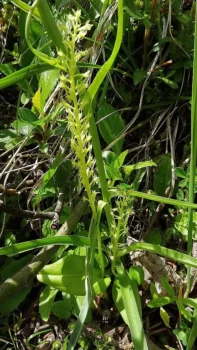
The adder’s-mouth orchid is a tiny perennial forb that proves good things really do come in small packages. Standing just 2-8 inches tall, this diminutive orchid typically produces a single, heart-shaped leaf (hence monophyllos, meaning single leaf) and a delicate spike of tiny, greenish flowers. Don’t expect a showy display – these blooms are more subtle than spectacular, appealing mainly to orchid enthusiasts and eagle-eyed naturalists.
Where You’ll Find This Arctic Native
This hardy little orchid calls some pretty chilly places home. As a native species, you’ll find adder’s-mouth orchids in Alaska and parts of Canada, particularly British Columbia. It’s part of a circumpolar family that also inhabits northern Europe and Asia, making it a true citizen of the world’s coldest regions.
- Species observed
- No observations
Why Most Gardeners Should Skip This One
Here’s where we need to get real: the adder’s-mouth orchid has an undefined conservation status (listed as S3?Q), which means scientists aren’t entirely sure how rare or stable wild populations are. When there’s uncertainty about a plant’s conservation status, the responsible approach is to assume it needs protection.
But even setting conservation concerns aside, this orchid is notoriously difficult to grow. Like most native orchids, it depends on specific soil fungi (mycorrhizae) to survive – a relationship so complex that even experienced orchid growers struggle to replicate it in cultivation.
Habitat and Growing Conditions
In the wild, adder’s-mouth orchids thrive in:
- Cool, consistently moist conditions
- Acidic soils rich in organic matter
- Boggy or swampy areas
- Partial to full shade
- USDA hardiness zones 1-6
These plants have a Facultative Wetland status across all regions, meaning they usually grow in wetlands but occasionally pop up in other moist areas. Think sphagnum bogs, wet meadows, and the soggy edges of ponds and streams.
Wildlife and Ecological Benefits
While we don’t have extensive data on this orchid’s specific wildlife benefits, small orchids like the adder’s-mouth typically attract tiny pollinators such as gnats and small flies. In their native ecosystems, they play a role in the complex web of bog and wetland plant communities.
Better Alternatives for Your Garden
Instead of attempting to grow this challenging orchid, consider these easier native alternatives that provide similar woodland charm:
- Wild ginger for heart-shaped leaves and woodland appeal
- Bunchberry for small, delicate flowers in shady spots
- Native sedges for bog garden interest
- Lady slipper orchids (where legally and sustainably available)
The Bottom Line
The adder’s-mouth orchid is absolutely fascinating – a tiny survivor of harsh northern climates with complex ecological relationships. But it’s also a plant that belongs in the wild, not in our gardens. If you’re lucky enough to spot one during a nature walk in Alaska or northern Canada, consider yourself privileged to witness one of nature’s more secretive performers. Take photos, make memories, but leave the plant where it belongs.
For those passionate about native orchids, supporting habitat conservation and botanical research is the best way to help ensure future generations can also marvel at these remarkable little plants in their natural homes.