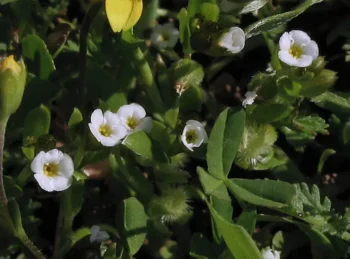
Adobe Popcornflower: A Specialized California Wetland Native
Meet the adobe popcornflower (Plagiobothrys acanthocarpus), a small but ecologically important annual wildflower that calls California’s wetlands home. While this native beauty might not be destined for your typical backyard garden, it plays a crucial role in some of the Golden State’s most unique ecosystems.
What Makes Adobe Popcornflower Special
Adobe popcornflower is an annual forb—essentially a non-woody herbaceous plant that completes its entire life cycle in one growing season. Like other members of the popcornflower family, it produces small, delicate white flowers that may remind you of tiny kernels of popped corn (hence the charming common name!).
This plant is a California native through and through, found exclusively within the state’s borders. What makes it particularly fascinating is its classification as an obligate wetland species in both the Arid West and Western Mountains, Valleys, and Coast regions. This means you’ll almost always find adobe popcornflower growing in wetland conditions—it’s basically a water-loving specialist.
- Species observed
- No observations
Why Most Gardeners Won’t Plant This One
Let’s be honest: adobe popcornflower isn’t your typical garden plant, and here’s why:
- It requires consistently wet to saturated soils year-round
- It’s adapted to very specific wetland conditions that are difficult to replicate
- As an annual, it dies back completely each year and may not reliably self-seed in garden conditions
- It’s not widely available in the nursery trade
Unless you’re creating a specialized wetland garden, restoration project, or have natural wetland areas on your property, this little wildflower probably isn’t the right fit for your landscaping needs.
For the Wetland Garden Enthusiast
If you’re one of the dedicated souls working on wetland restoration or happen to have boggy conditions that need native plants, adobe popcornflower could be worth considering. Here’s what you need to know:
Growing Conditions
- Requires full sun exposure
- Needs constantly moist to wet, even waterlogged soils
- Thrives in clay or adobe soils (as the name suggests!)
- Best suited for USDA hardiness zones 8-10
Planting and Care Tips
- Direct seed in fall or early winter when natural rains begin
- Ensure planting area stays consistently wet throughout the growing season
- No fertilization needed—wetland plants are adapted to nutrient-poor conditions
- Allow plants to complete their life cycle and drop seeds naturally for future generations
Ecological Value
While adobe popcornflower might not win any gardening awards, it’s an important piece of California’s wetland puzzle. These small wildflowers likely provide nectar and pollen for native bees and other small pollinators, and their seeds may feed wetland birds and other wildlife.
In its natural habitat, adobe popcornflower helps maintain the biodiversity that makes California’s wetland ecosystems so special. As development continues to pressure these fragile habitats, every native wetland species becomes more precious.
Better Alternatives for Most Gardens
If you’re drawn to the idea of native California wildflowers but don’t have wetland conditions, consider these more garden-friendly alternatives:
- California poppies for sunny, dry areas
- Baby blue eyes for partial shade
- Clarkia species for seasonal color
- Native lupines for dramatic spikes of color
The Bottom Line
Adobe popcornflower is a perfect example of why we need to protect California’s remaining wetland habitats. While it’s not suited for most home gardens, this specialized native plays an important role in its ecosystem. If you’re working on wetland restoration or happen to have the right soggy conditions, give this little trooper a try—but for most of us, it’s better appreciated in its natural habitat or in photos.
Remember, every native plant has its place in the grand scheme of things, even if that place isn’t necessarily in our backyard gardens!