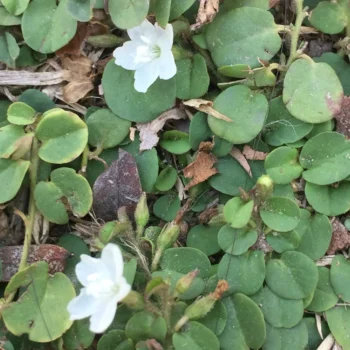
Agracejo Rastrero: A Caribbean Native Ground Cover Worth Knowing
If you’re gardening in the Caribbean and looking for a tough, low-maintenance native ground cover, let me introduce you to agracejo rastrero (Evolvulus nummularius). This little-known herbaceous perennial might not be the flashiest plant in your garden, but it’s got some serious staying power and deserves a spot in native plant enthusiasts’ hearts.
What Exactly Is Agracejo Rastrero?
Agracejo rastrero, scientifically known as Evolvulus nummularius, is a perennial forb that stays close to the ground. Think of it as nature’s answer to a living carpet – it’s herbaceous (meaning it doesn’t develop woody stems) and has a prostrate or trailing growth habit that makes it perfect for covering ground. You might also see it listed under its botanical synonym, Convolvulus nummularius, in older references.
Where Does It Call Home?
This plant is a true Caribbean native, naturally occurring in Puerto Rico and the U.S. Virgin Islands. It’s perfectly adapted to the tropical and subtropical conditions of these islands, having evolved to thrive in the region’s unique climate and soil conditions.
- Species observed
- No observations
Why Consider Planting Agracejo Rastrero?
If you’re lucky enough to garden in USDA hardiness zones 10-11, here’s why agracejo rastrero might be worth your consideration:
- Native plant benefits: Supporting local ecosystems by choosing plants that naturally belong in your area
- Low maintenance: Once established, it requires minimal care and watering
- Ground cover potential: Its trailing habit makes it excellent for covering bare spots
- Drought tolerance: Well-suited to dry conditions once its roots are established
- Coastal adaptability: Can handle the challenging conditions often found in seaside gardens
Garden Design Ideas
Agracejo rastrero works beautifully in several landscape applications:
- Rock gardens: Its low-growing habit complements rocky terrain perfectly
- Coastal landscapes: Naturally suited for seaside conditions
- Native plant gardens: An authentic choice for Caribbean native plant enthusiasts
- Ground cover areas: Fills in spaces where grass might struggle
Growing Conditions and Care
The good news is that agracejo rastrero isn’t particularly fussy once you understand its basic needs:
- Light: Prefers full sun but can tolerate partial shade
- Soil: Well-draining soil is absolutely essential – this plant does not like wet feet
- Water: Drought tolerant once established, but regular watering during establishment period
- Climate: Only suitable for tropical and subtropical areas (zones 10-11)
Planting and Establishment Tips
Getting agracejo rastrero off to a good start is pretty straightforward:
- Plant during the warmer months when growth is most active
- Ensure excellent drainage – amend heavy soils with sand or organic matter if needed
- Water regularly during the first few months until roots are established
- Once established, reduce watering frequency significantly
- Minimal fertilization needed – this plant is adapted to lean soils
The Reality Check
Let’s be honest – agracejo rastrero isn’t going to work for most gardeners. If you’re not in Puerto Rico, the U.S. Virgin Islands, or a similarly tropical climate, this plant simply won’t survive your winters. It’s strictly a warm-weather, tropical native that can’t handle temperatures below what you’d find in zones 10-11.
For mainland U.S. gardeners looking for similar ground cover options, consider native alternatives suited to your specific region instead.
Is It Right for Your Garden?
Agracejo rastrero is perfect for you if:
- You garden in Puerto Rico or the U.S. Virgin Islands
- You’re creating a native plant garden in these areas
- You need a low-maintenance ground cover for challenging spots
- You’re working with coastal or dry garden conditions
However, it’s not the right choice if you’re looking for showy flowers, rapid coverage, or if you garden outside of its native tropical range.
While agracejo rastrero may not be the most glamorous plant in the gardening world, it represents something valuable – a tough, native ground cover that’s perfectly adapted to Caribbean conditions. For the right gardener in the right location, it’s a solid choice that honors the local ecosystem while providing practical landscape benefits.