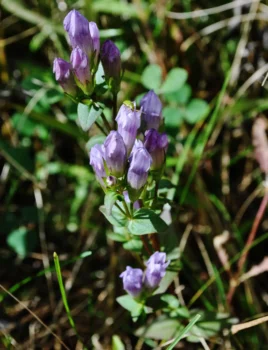
Agueweed: A Lesser-Known Native Wildflower Worth Discovering
If you’re on the hunt for native plants that fly under the radar, agueweed (Gentianella quinquefolia occidentalis) might just be the hidden gem your garden needs. This delicate North American native belongs to the gentian family and offers a subtle charm that’s often overlooked in favor of showier wildflowers.
What Exactly Is Agueweed?
Agueweed is a herbaceous forb—basically a non-woody plant that lacks the thick, secondary growth you’d find in shrubs or trees. What makes this plant particularly interesting is its dual nature: it can behave as either an annual or perennial, adapting to local growing conditions. You might also encounter it under its scientific synonyms Gentianella occidentalis or Gentiana quinquefolia var. occidentalis in older botanical references.
Where Does Agueweed Call Home?
This native plant has quite the geographic spread across North America, naturally occurring in both Canada and the lower 48 states. You’ll find wild populations thriving from the Great Lakes region down through the Mississippi Valley and into parts of the Southeast. Specifically, agueweed grows in Arkansas, Ontario, Illinois, Indiana, Iowa, Kansas, Kentucky, Michigan, Minnesota, Mississippi, Missouri, Ohio, Tennessee, Virginia, and Wisconsin.
- Species observed
- No observations
Why Consider Agueweed for Your Garden?
Here’s where things get a bit tricky—and honestly, refreshingly mysterious. Agueweed is one of those native plants that hasn’t been extensively studied or widely cultivated, which means specific growing information is somewhat limited. However, this shouldn’t discourage adventurous gardeners! Here’s what we do know:
- It’s a true native species, supporting local ecosystems
- As a member of the gentian family, it likely produces small, attractive flowers
- Its herbaceous nature makes it suitable for wildflower gardens and naturalized areas
- The plant’s adaptability (annual/perennial) suggests it’s reasonably resilient
Garden Design and Landscape Role
Agueweed fits beautifully into several garden styles:
- Native plant gardens: Perfect for authentic regional landscapes
- Prairie restorations: Adds diversity to grassland plantings
- Naturalized areas: Ideal for low-maintenance wild spaces
- Pollinator gardens: Though specific benefits aren’t well-documented, most gentians support beneficial insects
The Growing Challenge (And Opportunity)
Here’s where agueweed becomes an exciting project for the experimental gardener. Since specific cultivation information is limited, growing this plant is part detective work, part gardening adventure. Based on its native range and family characteristics, it likely prefers:
- Well-draining soils
- Full sun to partial shade
- Moderate moisture levels
- Cool to moderate temperatures
Should You Plant Agueweed?
If you’re a gardener who enjoys supporting native biodiversity and doesn’t mind a bit of uncertainty, agueweed could be a fascinating addition to your landscape. Its native status means it belongs in North American ecosystems, and growing it helps preserve genetic diversity of regional flora.
However, be prepared for some trial and error. Since cultivation information is limited, you might need to experiment with different locations and growing conditions in your garden. This makes agueweed perfect for:
- Experienced native plant enthusiasts
- Gardeners interested in botanical exploration
- Those working on habitat restoration projects
- Anyone wanting to grow something truly unique
Finding and Growing Agueweed
The biggest challenge with agueweed isn’t growing it—it’s finding it! This plant isn’t commonly available in nurseries, so you might need to:
- Contact native plant societies in your region
- Check with specialized native plant nurseries
- Connect with botanical gardens or university extension programs
- Join online native plant communities for sourcing tips
If you do locate seeds or plants, start small and observe how they perform in your specific conditions. Keep notes on what works and what doesn’t—you might be contributing valuable cultivation knowledge to the gardening community!
The Bottom Line
Agueweed represents the exciting frontier of native plant gardening—species that are ecologically valuable but horticulturally underexplored. While it may not offer the instant gratification of well-known natives, it provides something potentially more rewarding: the chance to pioneer the cultivation of a lesser-known native species while supporting local biodiversity.
For gardeners willing to embrace a bit of botanical mystery, agueweed might just become your most interesting garden conversation starter.