Growing ‘Aku ‘Aku: Hawaii’s Critically Endangered Forest Giant
If you’re drawn to dramatic, tropical plants with a story to tell, ‘aku ‘aku (Cyanea tritomantha) might catch your attention. But before you fall in love with this stunning Hawaiian native, there’s something crucial you need to know: this magnificent tree is hanging on by a thread in the wild.
A Plant on the Brink
‘Aku ‘aku holds the sobering distinction of being listed as Endangered in the United States, with a Global Conservation Status of S1—meaning it’s critically imperiled. With typically five or fewer occurrences and very few remaining individuals (fewer than 1,000), this species is fighting for survival. If you’re considering growing ‘aku ‘aku, it’s essential that you source plants only through responsible conservation programs or botanical institutions—never from wild populations.
What Makes ‘Aku ‘Aku Special
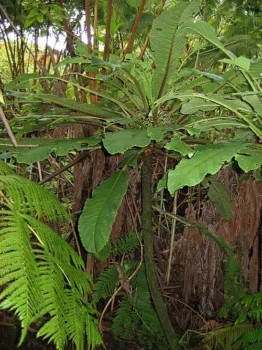
Also known simply as ‘aku, this perennial tree is a member of the bellflower family and represents one of Hawaii’s most distinctive plant groups. ‘Aku ‘aku typically grows as a single-stemmed tree reaching heights of 13-16 feet or more, creating an almost palm-like silhouette that’s instantly recognizable in Hawaii’s native forests.
The plant’s large, dramatically lobed leaves create a lush, tropical appearance that makes it a stunning specimen plant. Its unique flowering structure reflects millions of years of evolution in isolation, making it a living piece of Hawaiian natural history.
Where ‘Aku ‘Aku Calls Home
‘Aku ‘aku is endemic to Hawaii, meaning it exists nowhere else on Earth. This remarkable tree has evolved specifically within Hawaii’s unique climate and ecosystem conditions.
- Species observed
- No observations
Growing Conditions and Care
If you’re committed to conservation and have access to responsibly sourced plants, ‘aku ‘aku requires very specific conditions to thrive:
- Climate: USDA zones 10-11 only—this is strictly a tropical plant
- Moisture: Consistent humidity and well-draining but moist soil
- Light: Partial shade; avoid harsh, direct sunlight
- Soil: Well-draining, rich organic matter
- Protection: Shield from strong winds
As a facultative upland species, ‘aku ‘aku usually grows in non-wetland areas but can tolerate some wetland conditions, giving you slight flexibility in placement within appropriate climates.
The Conservation Garden Role
‘Aku ‘aku works best in specialized tropical gardens, particularly those focused on Hawaiian native plants or conservation efforts. It’s not a plant for casual gardeners—it requires dedication, appropriate climate conditions, and a commitment to conservation ethics.
In the right setting, it serves as a spectacular specimen plant that can anchor a Hawaiian-themed landscape while contributing to species preservation efforts.
A Plant with a Mission
Growing ‘aku ‘aku isn’t just about adding an exotic plant to your garden—it’s about participating in conservation. This species historically played important ecological roles, likely serving as a pollinator resource for Hawaii’s native birds, many of which are now extinct or endangered themselves.
Should You Grow ‘Aku ‘Aku?
Only consider ‘aku ‘aku if you:
- Live in an appropriate tropical climate (zones 10-11)
- Can source plants through legitimate conservation programs
- Are committed to providing specialized care
- Understand you’re participating in species conservation
For most gardeners interested in Hawaiian natives, consider working with local native plant societies or botanical gardens that may have conservation programs for this and other endangered Hawaiian species. Your garden could become part of the solution in keeping ‘aku ‘aku from disappearing forever.
Remember: every plant grown responsibly is a victory in the fight to preserve Hawaii’s irreplaceable natural heritage. ‘Aku ‘aku isn’t just a garden plant—it’s a living treasure that needs our help to survive.