Alabama Swamp Flatsedge: A Native Sedge for Wet Gardens
If you’re looking to add some authentic Southern charm to your water garden or rain garden, Alabama swamp flatsedge might just be the unsung hero you’ve been searching for. This perennial sedge brings a touch of wild elegance to wet spaces while supporting local ecosystems – though it definitely has some strong opinions about where it wants to live!
Meet the Alabama Swamp Flatsedge
Alabama swamp flatsedge (Cyperus ligularis) is a native perennial sedge that belongs to the grass-like family of plants. You might also see it listed under its former scientific name, Mariscus ligularis. Like other sedges, it features the characteristic triangular stems that help distinguish it from true grasses – remember the old saying sedges have edges!
Where Does It Call Home?
This southeastern native has a somewhat limited but interesting distribution. You’ll find it naturally occurring in Alabama, California, Florida, Puerto Rico, and the U.S. Virgin Islands. It’s particularly at home in the coastal regions of the southeastern United States, where it has adapted to the unique conditions of wetland environments.
- Species observed
- No observations
What Makes It Garden-Worthy?
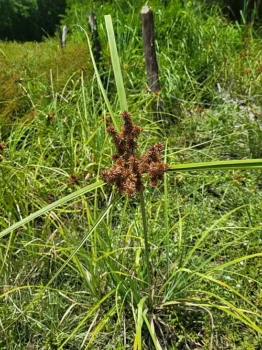
Alabama swamp flatsedge forms attractive clumps of grass-like foliage with those distinctive triangular stems. During its flowering period, it produces small brown flower clusters arranged in umbrella-like formations that add subtle texture and movement to the garden. While it may not be the showiest plant in your collection, it brings an authentic, naturalistic appeal that’s perfect for gardeners who appreciate understated beauty.
The Right Garden for the Right Plant
This sedge is tailor-made for specific garden situations:
- Rain gardens and bioswales
- Pond and stream margins
- Bog gardens
- Native plant gardens
- Coastal landscapes
- Wildlife habitat gardens
If you’re creating a naturalized wetland area or trying to manage stormwater runoff, Alabama swamp flatsedge could be an excellent choice.
Growing Conditions: It’s All About the Water
Here’s where Alabama swamp flatsedge gets particular – it’s classified as a facultative wetland plant, which means it usually prefers wet conditions but can occasionally tolerate drier spots. In the Atlantic and Gulf Coastal Plain, it’s most commonly found in wetland settings, though it shows a bit more flexibility in the Caribbean regions.
For successful growing, provide:
- Consistently moist to wet soil
- Full sun to partial shade
- USDA hardiness zones 8-11
- Tolerance for periodic flooding
Planting and Care Tips
The good news is that once Alabama swamp flatsedge is happy with its location, it’s quite low-maintenance:
- Plant in spring when soil temperatures warm up
- Choose a consistently moist location – this is non-negotiable!
- Space plants appropriately to allow for natural clump formation
- Minimal fertilization needed in most garden situations
- Allow to naturalize in appropriate settings
Wildlife and Ecosystem Benefits
While Alabama swamp flatsedge may not be a major pollinator magnet, it plays important ecological roles. Like many native sedges, it provides habitat structure for small wildlife, potential nesting material for birds, and helps with erosion control in wet areas. It’s also part of the natural plant community that supports the broader ecosystem health of wetland environments.
Is This Plant Right for Your Garden?
Alabama swamp flatsedge is definitely a specialist – it’s perfect if you have the right wet conditions and want to create authentic native plant communities. However, it’s not the best choice if:
- You have typical garden soil that drains well
- You’re looking for a low-water or drought-tolerant plant
- You want showy flowers or dramatic foliage
- You live outside of zones 8-11
But if you’re dealing with a wet, boggy area that other plants struggle with, or you’re passionate about creating native plant habitats, Alabama swamp flatsedge could be exactly what you need. It’s one of those plants that proves sometimes the most specialized species are the most valuable for the right situation!
The Bottom Line
Alabama swamp flatsedge isn’t going to win any flashy flower contests, but it’s a solid choice for gardeners who want to work with nature rather than against it. If you have wet conditions and want to support native ecosystems, this unassuming sedge might just become one of your most reliable garden companions. Just remember – keep it wet, and it’ll keep you happy!