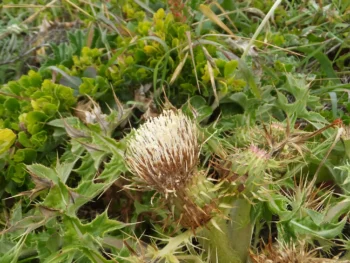
Alameda County Thistle: A Rare California Native Worth Protecting in Your Garden
Meet the Alameda County thistle (Cirsium quercetorum), a fascinating native California wildflower that’s as beautiful as it is ecologically important. This spiky beauty might not be the first plant that comes to mind when planning your garden, but this rare thistle deserves serious consideration from native plant enthusiasts and wildlife gardeners alike.
What Makes This Thistle Special?
The Alameda County thistle is a true California native, belonging to the sunflower family and classified as both biennial and perennial. As a forb (herbaceous flowering plant), it lacks woody stems but makes up for it with striking purple blooms and distinctive spiny foliage that creates architectural interest in the landscape.
This isn’t your average roadside thistle – it’s endemic to California’s oak woodlands and chaparral communities, where it has evolved alongside native wildlife for thousands of years.
Where Does It Naturally Grow?
You’ll find this special thistle exclusively in California, where it thrives in oak woodland and chaparral habitats. Its natural range reflects its adaptation to the Mediterranean climate and well-draining soils typical of these ecosystems.
- Species observed
- No observations
Important Conservation Note
Here’s something every gardener should know: the Alameda County thistle has a conservation status of S3?, which indicates its rarity status is somewhat undefined but potentially of concern. This means if you’re interested in growing this plant, it’s crucial to source it responsibly from reputable native plant nurseries that propagate from ethically collected seed – never collect from wild populations.
Why Consider Growing Alameda County Thistle?
Despite its prickly appearance, this thistle offers several compelling reasons to include it in your native garden:
- Pollinator magnet: The purple flower heads are irresistible to butterflies, bees, and other beneficial insects
- Wildlife habitat: Birds love the seeds, and the plant provides shelter for small creatures
- Low maintenance: Once established, it’s drought-tolerant and requires minimal care
- Unique beauty: The architectural form and striking flowers add wild elegance to naturalistic gardens
- Conservation value: Growing rare natives helps preserve genetic diversity
Growing Conditions and Care
The Alameda County thistle thrives in conditions similar to its native habitat:
- Climate: USDA hardiness zones 8-10, adapted to Mediterranean climates
- Sunlight: Full sun to partial shade
- Soil: Well-draining soils; avoid areas that stay soggy
- Water: Drought-tolerant once established; minimal summer water needed
- Maintenance: Very low maintenance – let it follow its natural lifecycle
Best Garden Settings
This thistle shines in:
- Native plant gardens
- Wildlife and pollinator gardens
- Naturalistic landscapes
- Habitat restoration projects
- Mediterranean-style gardens
Planting and Care Tips
Growing Alameda County thistle successfully is surprisingly straightforward:
- Plant in fall or early spring when temperatures are mild
- Choose a location with good drainage – soggy soils are this plant’s enemy
- Give it space to spread naturally as both a biennial and perennial
- Avoid overwatering once established
- Let the plant complete its natural cycle to support wildlife
- Allow some plants to go to seed for natural reseeding
The Bottom Line
The Alameda County thistle represents the perfect intersection of beauty, ecological value, and conservation importance. While its rarity means you’ll need to source it carefully, this remarkable native offers gardeners a chance to support both local wildlife and plant conservation efforts. If you’re passionate about native plants and creating habitat, this spiky beauty deserves a spot in your garden – just remember to source it responsibly and give it the well-draining conditions it craves.
By choosing to grow rare natives like the Alameda County thistle, you’re not just creating a beautiful garden – you’re helping preserve California’s natural heritage for future generations.