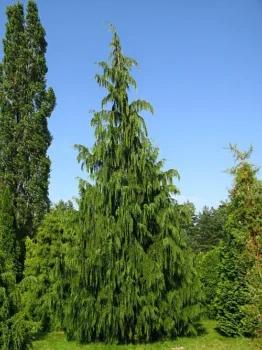
Alaska Cedar: A Majestic Native Conifer for Pacific Northwest Gardens
If you’re looking for a show-stopping evergreen that’s both beautiful and beneficial to local wildlife, meet the Alaska cedar (Callitropis nootkatensis). This magnificent native conifer brings a touch of the wild Pacific Northwest right to your backyard, complete with gracefully weeping branches and a stately presence that only gets better with age.
What Makes Alaska Cedar Special?
Alaska cedar goes by several scientific names you might encounter – it’s been shuffled around botanically and was previously known as Chamaecyparis nootkatensis and Cupressus nootkatensis. But regardless of what the scientists call it, this tree has been gracing the Pacific coastline for millennia with its distinctive beauty.
What sets Alaska cedar apart from other conifers is its elegant, drooping branch tips that give it an almost willow-like grace despite being a sturdy evergreen. The fine-textured, blue-green foliage stays dense year-round, providing consistent visual interest and wildlife habitat.
Where Alaska Cedar Calls Home
This tree is truly a child of the Pacific Northwest, naturally occurring from Alaska down through British Columbia, Washington, Oregon, and into Northern California. As a native species across this range, it’s perfectly adapted to the region’s climate and plays an important role in local ecosystems.
- Species observed
- No observations
Why Your Garden (and Local Wildlife) Will Love Alaska Cedar
Alaska cedar isn’t just a pretty face – it’s a wildlife superstar too. Small mammals and terrestrial birds rely on this tree for 5-10% of their diet, munching on its seeds and finding occasional shelter in its branches. While it may not be the showiest pollinator plant (being wind-pollinated), it’s an essential part of the native ecosystem web.
From a design perspective, Alaska cedar shines as:
- A stunning specimen tree that commands attention
- An excellent screening plant with its dense, year-round foliage
- A natural windbreak for exposed properties
- A perfect fit for naturalistic and native plant gardens
Size Expectations: Plan for Grandeur
Here’s where you need to think big – Alaska cedar is a slow grower but a long-lived giant. At 20 years, you’re looking at around 25 feet tall, but mature trees can reach an impressive 75 feet in height. This isn’t a plant for small spaces, but if you have room, the payoff is spectacular.
The good news about that slow growth rate? You’ll have years to enjoy each stage of its development, and it won’t outgrow its space overnight.
Growing Conditions: Keep It Cool and Moist
Alaska cedar thrives in USDA hardiness zones 4-7, preferring the cooler conditions of its native range. Here’s what this tree needs to flourish:
- Soil: Adaptable to various soil textures but prefers well-draining, slightly acidic conditions (pH 5.5-7.0)
- Water: Medium moisture needs – it can handle some variation but isn’t drought-tolerant
- Light: Shade tolerant, which makes it versatile for different garden locations
- Climate: Needs at least 111 frost-free days and 45-100 inches of annual precipitation
Thanks to its facultative wetland status, Alaska cedar can handle both wet and dry sites, making it more adaptable than you might expect.
Planting and Care Tips
Getting your Alaska cedar off to a good start is crucial for long-term success:
- Timing: Plant in spring or early fall when temperatures are moderate
- Location: Choose a spot with room to grow – remember that 75-foot mature height!
- Soil prep: Ensure good drainage while maintaining moisture retention
- Spacing: Allow 300-700 trees per acre if planting multiple specimens
- Initial care: Keep soil consistently moist (but not waterlogged) during establishment
The tree has low fertility requirements, so don’t overdo it with fertilizers. Its natural slow growth means patience is key – but the wait is worth it.
Propagation Possibilities
Alaska cedar can be grown from seed (about 108,000 seeds per pound!), cuttings, or purchased as container or bare-root plants. Seeds need cold stratification, so if you’re growing from seed, plan for a winter chill period. Commercial availability is typically through specialty native plant nurseries rather than general garden centers.
The Bottom Line
Alaska cedar is a fantastic choice for gardeners with space who want to support native ecosystems while adding a truly majestic tree to their landscape. Yes, it requires patience and the right growing conditions, but few trees can match its combination of ecological value, wildlife benefits, and sheer beauty. If you’re gardening in the Pacific Northwest and have room for a large tree, Alaska cedar deserves serious consideration – your garden (and the local wildlife) will thank you for generations to come.