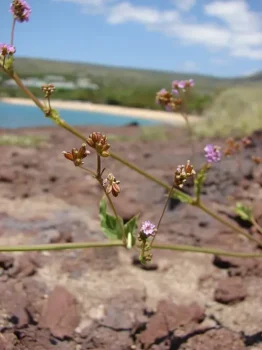
Alena: A Rare Hawaiian Native Worth Protecting
Meet alena (Boerhavia herbstii), one of Hawaii’s lesser-known botanical treasures. This perennial native plant might not be filling up your local nursery shelves anytime soon, but it deserves a spot on every native plant lover’s radar. Why? Because alena represents something truly special in the world of Hawaiian flora – and it needs our help.
A True Hawaiian Original
Alena is what botanists call an endemic species, meaning it’s found naturally nowhere else on Earth except Hawaii. This perennial has been quietly growing in the Hawaiian islands for countless generations, adapting perfectly to its island home. When you’re talking about authentic Hawaiian landscaping, it doesn’t get more authentic than this.
Where You’ll Find Alena
This Hawaiian exclusive calls only the islands of Hawaii home. It’s not spreading beyond the Pacific – this plant is as local as it gets, having evolved specifically for Hawaiian growing conditions.
- Species observed
- No observations
The Conservation Reality Check
Here’s where things get serious, folks. Alena carries a Global Conservation Status of S3, which translates to Vulnerable. This means the species is either very rare throughout its range or faces other factors that make it vulnerable to disappearing altogether. We’re typically talking about only 21 to 100 known occurrences, or between 3,000 and 10,000 individual plants total. In plant terms, that’s not many!
This rarity status is crucial information for any gardener considering alena. While we absolutely want to encourage the cultivation of native Hawaiian plants, it comes with responsibility.
Should You Grow Alena?
The short answer is: maybe, but only if you can source it responsibly. Here’s what that means:
- Only purchase from reputable native plant nurseries that propagate their own stock
- Never collect plants from the wild – this could harm already vulnerable populations
- Consider growing alena as part of conservation efforts rather than just decoration
- Connect with local Hawaiian native plant societies for guidance
Growing Alena: What We Know
Unfortunately, detailed cultivation information for alena is limited – partly because it’s so rare that few people have extensive experience growing it. As a Hawaiian native perennial, we can make some educated guesses about its preferences based on Hawaii’s climate, but specific care instructions are scarce.
What we do know is that as a native Hawaiian plant, alena likely prefers:
- Warm temperatures year-round
- Well-draining soil
- Growing conditions similar to its natural Hawaiian habitat
The Bigger Picture
Growing alena isn’t just about adding another plant to your garden – it’s about participating in conservation. Every responsibly grown alena plant represents a small victory for Hawaiian biodiversity. These plants carry genetic heritage that stretches back thousands of years, and once they’re gone, they’re gone forever.
Consider Native Alternatives
If sourcing alena proves difficult (which it likely will), consider other native Hawaiian plants that are more readily available and better documented. Species like native Hawaiian hibiscus, ‘ohi’a lehua, or native ferns can provide that authentic Hawaiian feel while being easier to grow and source responsibly.
The Bottom Line
Alena represents the best and most challenging aspects of native plant gardening. It’s authentically local, ecologically valuable, and absolutely irreplaceable. But its rarity means growing it comes with responsibility. If you’re up for the challenge and can source plants ethically, alena could be a meaningful addition to a conservation-minded Hawaiian garden. Just remember – with great plants comes great responsibility!
Before taking the plunge, connect with local botanical gardens, native plant societies, or conservation organizations in Hawaii. They can provide the best guidance on whether alena is right for your specific situation and how to source it responsibly.