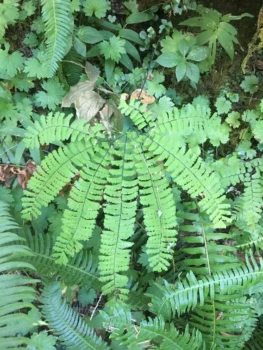
Aleutian Maidenhair: A Delicate Native Fern for Your Shade Garden
If you’re looking to add some ethereal beauty to your shaded garden spaces, the Aleutian maidenhair (Adiantum aleuticum) might just be the perfect native plant to consider. This graceful fern brings a touch of woodland magic wherever it grows, with its distinctive fan-shaped fronds dancing on impossibly thin, dark stems.
What Makes Aleutian Maidenhair Special?
The Aleutian maidenhair is a perennial fern that’s perfectly adapted to North American growing conditions. As a true native, it has been gracing our woodlands and rocky slopes for millennia, making it an excellent choice for gardeners who want to support local ecosystems while enjoying stunning natural beauty.
This charming fern is classified as a forb – essentially a non-woody perennial that lacks the thick, secondary growth you’d find in shrubs or trees. Instead, it maintains its delicate appearance year after year, emerging fresh each spring from underground growing points.
Where Does It Naturally Grow?
Aleutian maidenhair has an impressive native range across North America. You’ll find it naturally growing in Alaska, throughout much of Canada, and in many states across the continental United States. Its distribution includes Alaska, Alberta, British Columbia, Quebec, and states from Arizona and California in the west to Maine, Vermont, and Pennsylvania in the east, with populations scattered across the mountain regions of Colorado, Idaho, Montana, Nevada, Oregon, Utah, Washington, and Wyoming.
- Species observed
- No observations
Perfect Spots for Your Garden
This versatile fern adapts well to various garden settings, making it a fantastic choice for:
- Woodland and shade gardens where it can mirror its natural forest habitat
- Rock gardens, especially in cooler, shadier sections
- Naturalized areas where you want to establish native plant communities
- As an elegant groundcover in areas that receive dappled or full shade
The fern’s delicate, fan-shaped fronds create beautiful texture contrasts when planted alongside broader-leafed shade plants, and its airy appearance prevents it from overwhelming smaller companion plants.
Growing Conditions and Care
Aleutian maidenhair thrives in conditions that mimic its natural woodland habitat. Here’s what it needs to flourish:
Light: Partial to full shade is essential. This fern will struggle in direct sunlight, especially hot afternoon sun.
Soil: Well-draining soil that retains some moisture is ideal. It appreciates organic-rich soils and can handle rocky conditions, reflecting its natural growing preferences.
Water: Consistent moisture is key, but avoid waterlogged conditions. The plant’s wetland status varies by region – it can handle both wet and dry conditions but generally prefers the middle ground.
Climate: Hardy across a wide range of zones, generally thriving in USDA zones 2-8 depending on your specific location.
Planting and Care Tips
Getting your Aleutian maidenhair established is relatively straightforward:
- Plant in spring when the soil is workable and temperatures are moderate
- Space plants appropriately to allow for their mature spread
- Apply a layer of organic mulch to help retain soil moisture and regulate temperature
- Water regularly during the first growing season to help establish strong roots
- Divide established clumps every few years to maintain vigor and create new plants
- Remove old fronds in late fall or early spring to make way for new growth
Wildlife and Ecosystem Benefits
While Aleutian maidenhair doesn’t produce the showy flowers that attract pollinators like bees and butterflies, it still plays important roles in native ecosystems. Ferns provide shelter and habitat for small wildlife, and their presence helps maintain the complex understory ecosystem that many native plants and animals depend on.
As a native species, planting Aleutian maidenhair supports biodiversity and helps preserve the genetic diversity of local plant communities. It’s also an excellent choice for gardeners interested in creating authentic regional landscapes.
Is Aleutian Maidenhair Right for Your Garden?
This native fern is an excellent choice if you have shaded garden areas that need some delicate texture and natural beauty. Its wide native range means it’s likely well-adapted to your local growing conditions if you live within its natural distribution area.
Consider Aleutian maidenhair if you’re creating a native plant garden, establishing a woodland landscape, or simply want a low-maintenance perennial that brings four-season interest to shaded spaces. Its graceful form and reliable performance make it a wonderful addition to any shade garden focused on native plants.
Just remember to provide the consistent moisture and shade it craves, and you’ll be rewarded with years of delicate, dancing fronds that capture the essence of North American woodlands right in your own backyard.