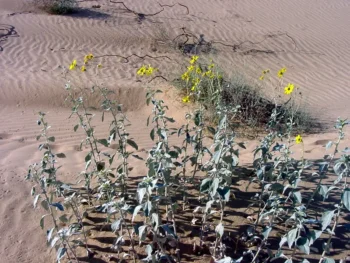
Algodones Sunflower: A Rare Desert Gem Worth Knowing
Meet the Algodones sunflower (Helianthus niveus tephrodes), a fascinating and quite rare member of the sunflower family that calls the hot, dry landscapes of the American Southwest home. If you’re scratching your head wondering why you’ve never heard of this particular sunflower before, you’re not alone – this little-known native is one of nature’s well-kept secrets.
What Makes This Sunflower Special?
The Algodones sunflower is a native forb that belongs to the vast sunflower genus, but don’t expect to find it at your local nursery anytime soon. This plant has a Global Conservation Status of S4T2, which essentially means it’s quite rare and deserves our attention and protection. It’s also known by its synonym Helianthus tephrodes, though you’re unlikely to encounter either name in everyday gardening conversations.
As a native species to the lower 48 states, this sunflower has evolved specifically to thrive in the unique conditions of its natural habitat. It’s classified as both annual and perennial, meaning it can complete its lifecycle in one year or persist for multiple seasons depending on conditions.
Where Does It Call Home?
The Algodones sunflower has a rather exclusive address – you’ll only find it naturally occurring in Arizona and California. This limited geographic distribution is part of what makes it so special and, unfortunately, so vulnerable.
- Species observed
- No observations
Should You Grow Algodones Sunflower?
Here’s where things get a bit complicated. While this native sunflower would theoretically make a wonderful addition to desert and xeriscape gardens, its rarity status means you need to approach it with extra care and responsibility.
The Green Light (With Cautions)
- It’s a true native species that supports local ecosystems
- Like other sunflowers, it likely provides benefits to pollinators
- Perfect for authentic desert landscaping in Arizona and California
- Represents an important piece of regional biodiversity
The Red Flags
- Its rarity means wild collection is absolutely off-limits
- Finding responsibly sourced seeds or plants may be nearly impossible
- Limited information exists about cultivation requirements
- May require specialized growing conditions that are difficult to replicate
Growing Conditions and Care
Given its natural range in Arizona and California’s desert regions, the Algodones sunflower likely thrives in:
- Full sun exposure
- Well-draining, sandy or rocky soils
- Low water conditions once established
- USDA hardiness zones 9-11 (estimated based on geographic range)
- Hot, dry summers with minimal rainfall
However, due to the limited research and cultivation information available for this specific variety, growing it successfully would likely require some experimentation and patience.
The Bottom Line
While the Algodones sunflower is undoubtedly a remarkable native plant that deserves recognition, it’s not the best choice for most home gardeners. Its rarity status means that any cultivation should only be attempted with responsibly sourced material – and finding such sources is extremely challenging.
If you’re drawn to the idea of growing rare native sunflowers, consider exploring other native Helianthus species that are more readily available and better documented. Your local native plant society or extension office can help you identify appropriate alternatives that will give you that native sunflower experience without potentially impacting wild populations.
Sometimes the best way to appreciate a rare plant is simply knowing it exists and supporting habitat conservation efforts that protect it in the wild. The Algodones sunflower reminds us that our native flora still holds mysteries and treasures waiting to be better understood and protected for future generations.