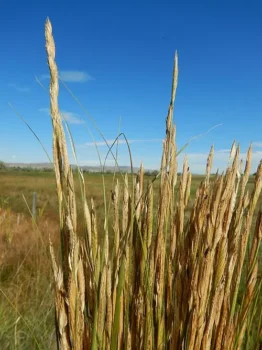
Alkali Cordgrass: A Tough Native Grass for Challenging Sites
If you’re looking for a hardy, low-maintenance native grass that can handle tough conditions, alkali cordgrass (Spartina gracilis) might just be your new best friend. This unassuming perennial grass may not win any beauty contests, but it’s got character and resilience that make it invaluable for certain gardening situations.
What is Alkali Cordgrass?
Alkali cordgrass is a native perennial grass that forms dense, spreading clumps through underground rhizomes. Don’t let the name fool you – while it can handle alkaline soils, it’s not limited to them. This grass typically grows about 3 feet tall with narrow, blue-green to gray-green leaves that have a coarse texture and provide nice movement in the landscape.
You might also see this plant listed under its scientific synonym Sporobolus hookerianus, as botanical names sometimes change as scientists learn more about plant relationships.
Where Does It Call Home?
This tough grass is native to a huge swath of North America, stretching from Alberta and British Columbia down through the western United States and into the Great Plains. You’ll find it growing naturally in Alberta, British Columbia, Manitoba, Saskatchewan, Northwest Territories, and across many western and plains states including Arizona, California, Colorado, Idaho, Kansas, Minnesota, Montana, Nebraska, Nevada, New Mexico, North Dakota, Oregon, South Dakota, Utah, Washington, and Wyoming.
- Species observed
- No observations
Why Plant Alkali Cordgrass?
Here’s where this grass really shines – it’s incredibly adaptable and tough as nails. If you have a challenging site that other plants struggle with, alkali cordgrass might be your solution:
- Handles difficult soils: Thrives in fine to medium-textured soils and tolerates highly alkaline conditions (pH up to 9.5)
- Salt tolerant: Great for areas affected by road salt or naturally saline conditions
- Wetland flexible: Can handle both wet and moderately dry conditions
- Low maintenance: Once established, it requires minimal care
- Erosion control: The rhizomatous growth habit helps stabilize soil
- Long-lived: This perennial will be with you for many years
Perfect Garden Situations
Alkali cordgrass isn’t for every garden, but it’s perfect for specific situations:
- Prairie and native grass gardens: Adds authentic texture to naturalized landscapes
- Rain gardens and bioswales: Handles fluctuating moisture levels well
- Erosion-prone slopes: The spreading root system helps hold soil in place
- Challenging sites: Where other plants struggle with poor drainage, alkaline soil, or salt exposure
- Low-water landscapes: Once established, it has moderate drought tolerance
Growing Conditions
This grass is surprisingly adaptable, but here are its preferences:
- Hardiness: Zones 3-9 (can handle temperatures down to -38°F)
- Sunlight: Full sun – it won’t tolerate shade
- Soil: Medium to fine-textured soils, pH 7.0-9.5
- Moisture: Moderate water needs; handles both wet and moderately dry conditions
- Fertility: Low fertility requirements – don’t pamper it with rich soil
Planting and Care Tips
Getting alkali cordgrass established is straightforward:
- Timing: Plant in spring after the last frost when you have at least 90 frost-free days ahead
- Propagation: Grow from seed or sprigs – seeds need no special treatment
- Planting density: Space plants to achieve 2,700-4,800 plants per acre for large installations
- Establishment: Be patient – seedlings have low vigor and establishment can be slow
- Maintenance: Once established, minimal care needed. Cut back in late winter if desired
- Fertilizing: Generally unnecessary – this grass prefers lean conditions
What to Expect
Alkali cordgrass has a moderate growth rate and will slowly spread to form colonies through its rhizomatous root system. In late summer, you’ll see small, inconspicuous yellow flower spikes that aren’t particularly showy but add subtle interest. The grass maintains its green color through the growing season and provides winter interest with its persistent structure.
While it won’t attract many pollinators directly (it’s wind-pollinated), it does provide valuable habitat structure for beneficial insects and small wildlife.
The Bottom Line
Alkali cordgrass isn’t the flashiest plant in the native plant world, but it’s a reliable workhorse for challenging sites. If you have problem areas with poor drainage, alkaline soil, or salt exposure, or if you’re creating a prairie or rain garden, this tough native grass could be exactly what you need. Just remember – it needs full sun and room to spread, so plan accordingly!