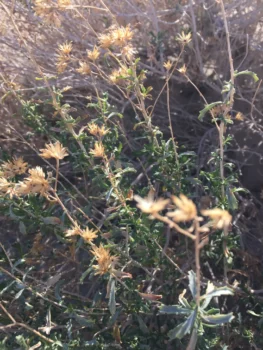
Alkali Goldenbush: A Desert Gem for Water-Wise Gardens
If you’re looking for a tough-as-nails native plant that laughs in the face of drought and still manages to put on a beautiful late-season flower show, let me introduce you to alkali goldenbush (Isocoma acradenia var. eremophila). This unassuming little shrub might just become your new favorite low-maintenance garden companion.
What Is Alkali Goldenbush?
Alkali goldenbush is a native perennial shrub that calls the American Southwest home. Don’t let the name fool you – while it can handle alkaline soils, this adaptable plant is much more versatile than its moniker suggests. This compact shrub typically stays under 1.5 feet tall, making it perfect for those spots where you want groundcover that won’t get out of hand.
Where Does It Grow Naturally?
This desert native has made itself at home across Arizona, California, Nevada, and Utah. It’s perfectly adapted to the challenging conditions of the Southwest, from scorching summers to alkaline soils that would make other plants throw in the towel.
- Species observed
- No observations
Why You’ll Love This Plant
Here’s what makes alkali goldenbush such a winner for modern gardens:
- Drought champion: Once established, this plant can survive on rainfall alone in most areas
- Late-season color: Produces clusters of bright yellow flowers when many other plants are calling it quits for the year
- Pollinator magnet: Bees and butterflies flock to those late summer and fall blooms
- Low maintenance: Plant it, water it occasionally the first year, then pretty much forget about it
- Native plant benefits: Supporting local ecosystems while reducing water usage
Perfect Garden Situations
Alkali goldenbush shines in several garden styles:
- Xeriscape and drought-tolerant landscapes
- Native plant gardens
- Desert-themed designs
- Erosion control on slopes
- Low-water groundcover areas
- Naturalistic prairie-style plantings
Growing Conditions and Care
The beauty of alkali goldenbush lies in its simplicity. Here’s what this easy-going plant needs:
Sun: Full sun is where this plant thrives. It can handle some light shade but won’t be as happy or floriferous.
Soil: Well-draining soil is key. It actually prefers lean, sandy, or rocky soils over rich garden earth. Alkaline conditions are fine, but it adapts to various pH levels.
Water: Water regularly the first year to help establish roots. After that, occasional deep watering during extremely dry spells is all it needs.
Climate: Hardy in USDA zones 7-10, this plant handles both heat and cold better than you might expect.
Planting and Care Tips
Getting alkali goldenbush established in your garden is refreshingly straightforward:
- Best planting time: Fall or early spring when temperatures are moderate
- Spacing: Plant 2-3 feet apart for groundcover effect
- Initial care: Water weekly the first growing season, then back off
- Fertilizer: Skip it – this plant prefers lean conditions
- Pruning: Light pruning after flowering to maintain shape if desired
The Bottom Line
Alkali goldenbush might not have the flashiest name, but it’s exactly the kind of reliable, beautiful native plant that modern water-wise gardens need. It offers late-season color when your garden needs it most, supports local pollinators, and asks for almost nothing in return. If you’re in its native range and looking for a low-maintenance shrub that actually earns its keep, alkali goldenbush deserves a spot in your landscape.
Plus, there’s something deeply satisfying about growing a plant that’s perfectly adapted to your local conditions – it’s gardening the way nature intended, with a lot less fuss and a lot more success.