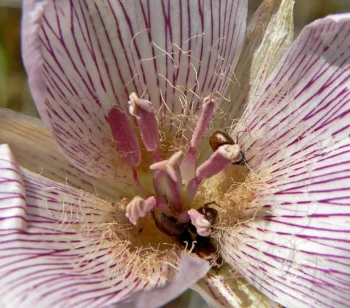
Alkali Mariposa Lily: A Rare Gem for the Dedicated Native Plant Gardener
If you’re drawn to rare beauties and have a passion for conservation, the alkali mariposa lily (Calochortus striatus) might just capture your heart. This stunning native perennial is not your everyday garden center find – and for good reason. Let’s dive into what makes this plant so special and whether it deserves a spot in your landscape.
A True Native with Limited Range
The alkali mariposa lily is a proud native of the American West, specifically calling California and Nevada home. This perennial forb – basically a non-woody flowering plant – has adapted to life in alkaline meadows and flats, making it quite the specialist in its natural habitat.
- Species observed
- No observations
Beauty That Comes with Responsibility
Here’s where things get serious: Calochortus striatus carries a Global Conservation Status of S2, meaning it’s imperiled in the wild. With typically only 6 to 20 known occurrences and an estimated 1,000 to 3,000 individual plants remaining, this lily is walking a tightrope toward extinction. This rarity status means that while growing it can contribute to conservation efforts, you absolutely must source your plants or bulbs responsibly from reputable native plant nurseries or conservation programs – never from wild populations.
What Makes It Garden-Worthy
Despite its challenges, the alkali mariposa lily offers unique rewards for the dedicated gardener:
- Stunning cup-shaped flowers with three white to pale yellow petals, often adorned with purple or dark markings
- Grows to a manageable 1-3 feet in height
- Attracts native bees and other specialized pollinators
- Contributes to biodiversity conservation efforts
- Perfectly adapted to water-wise gardening principles
Growing Conditions: Meeting Its Specific Needs
Success with alkali mariposa lily requires mimicking its natural alkaline habitat. Here’s what this picky beauty demands:
- Soil: Well-draining, alkaline soils are absolutely essential
- Sun exposure: Full sun to partial shade
- Water: Minimal water during the growing season, dry summers preferred
- Climate: Hardy in USDA zones 7-9
- Wetland tolerance: Classified as Facultative Wetland, meaning it can handle both wet and dry conditions
Planting and Care Tips
Growing this rare lily successfully requires patience and attention to detail:
- Plant bulbs in fall when temperatures cool
- Choose a location with excellent drainage – soggy soil is a death sentence
- Allow the plant to go naturally dormant in summer
- Resist the urge to water during dormancy
- Be patient – establishment can take time
Perfect Garden Settings
The alkali mariposa lily shines in:
- Native plant collections and botanical gardens
- Rock gardens with alkaline conditions
- Xeric (dry) landscapes
- Conservation-focused naturalistic gardens
- Specialized collections for serious native plant enthusiasts
The Bottom Line: Should You Plant It?
The alkali mariposa lily isn’t for everyone, and that’s okay. This plant is best suited for experienced native plant gardeners who understand the commitment required and can source plants ethically. If you’re up for the challenge and passionate about conservation, growing this rare beauty can be incredibly rewarding – both for your garden and for the species’ survival.
However, if you’re new to native gardening or looking for easier alternatives, consider starting with more common Calochortus species or other native bulbs that offer similar beauty without the conservation concerns. Remember, every plant we grow responsibly is a step toward supporting our native ecosystems.
The alkali mariposa lily reminds us that some of nature’s most beautiful offerings come with great responsibility. Are you ready to answer that call?