Alkali Seaheath: A Tough-as-Nails Ground Cover for Challenging Sites
If you’re dealing with salty soils, coastal conditions, or just plain difficult growing spots, alkali seaheath (Frankenia salina) might be the scrappy little plant you’ve been looking for. This low-growing perennial shrub doesn’t win any beauty contests, but what it lacks in showiness, it more than makes up for in sheer determination and resilience.
What Exactly Is Alkali Seaheath?
Alkali seaheath is a small, mat-forming perennial that rarely grows taller than 1.5 feet, though it can occasionally reach up to 3 feet in ideal conditions. Think of it as nature’s answer to challenging growing conditions – it’s the plant equivalent of that friend who thrives under pressure while everyone else is stressed out.
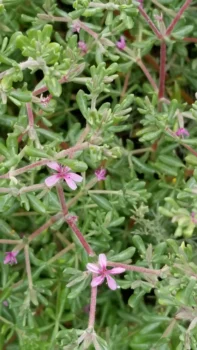
The plant forms dense, spreading carpets of tiny, needle-like gray-green leaves that give it an almost succulent appearance. During blooming season, it produces small pink to white flowers that, while not particularly showy, add a delicate touch to its otherwise rugged demeanor.
Where Does It Call Home?
Alkali seaheath is native to the western United States, particularly California, where it naturally occurs in coastal and inland saline areas. However, it has also established itself in Hawaii, where it’s considered a non-native species that reproduces on its own in the wild.
- Species observed
- No observations
The Appeal (And the Reality)
Let’s be honest – alkali seaheath isn’t going to be the star of your flower border. Its aesthetic appeal lies in its texture and reliability rather than flashy blooms. The silvery-gray foliage provides excellent contrast against other plants, and its low, spreading habit makes it useful as a living mulch or ground cover.
The real beauty of this plant is what it can handle: salt spray, alkaline soils, drought, and general neglect. It’s like the gardening equivalent of a reliable old truck – not pretty, but it gets the job done.
Growing Conditions and Care
Alkali seaheath thrives in USDA hardiness zones 8-11 and has some very specific preferences:
- Sunlight: Full sun is essential for best performance
- Soil: Well-draining soils are crucial; it actually prefers alkaline conditions
- Water: Drought-tolerant once established; overwatering is more likely to kill it than neglect
- Salt tolerance: Exceptional – perfect for coastal gardens
According to wetland status classifications, alkali seaheath is considered Facultative Wetland in most regions, meaning it usually occurs in wetlands but can adapt to drier conditions. This flexibility makes it valuable for transitional areas in your landscape.
Planting and Care Tips
The good news? Alkali seaheath is refreshingly low-maintenance once you understand its needs:
- Plant in spring after the last frost
- Ensure excellent drainage – this plant hates wet feet
- Water regularly the first year to establish, then reduce to minimal watering
- Skip the fertilizer – it’s adapted to poor soils and too much nutrition can make it weak
- Light pruning can help maintain shape, but it’s not necessary
Wildlife and Pollinator Benefits
While not a major wildlife magnet, alkali seaheath does provide some benefits to the ecosystem. Its small flowers attract minor pollinators like small native bees, and its dense mat-forming habit can provide cover for small creatures. It’s not going to transform your yard into a wildlife sanctuary, but every little bit helps.
Is Alkali Seaheath Right for Your Garden?
This plant is perfect for you if:
- You have challenging growing conditions (salty, alkaline, or poor soils)
- You need erosion control on slopes
- You want a low-maintenance ground cover
- You’re creating a xeriscape or water-wise garden
- You live in coastal areas with salt spray
However, you might want to look elsewhere if you’re seeking:
- Showy flowers or dramatic foliage
- A plant for rich, moist garden beds
- Something for shaded areas
For gardeners in Hawaii, while alkali seaheath isn’t invasive, you might consider native alternatives like native sedges or grasses that provide similar ground cover benefits while supporting local ecosystems.
The Bottom Line
Alkali seaheath won’t win any garden beauty pageants, but it’s the kind of reliable, hard-working plant that solves problems other plants can’t handle. If you have a challenging spot where nothing else will grow, or if you’re creating a water-wise landscape in a tough climate, this scrappy little survivor might just be exactly what you need.
Sometimes the best plants aren’t the prettiest ones – they’re the ones that show up, do their job, and ask for nothing in return. That’s alkali seaheath in a nutshell.