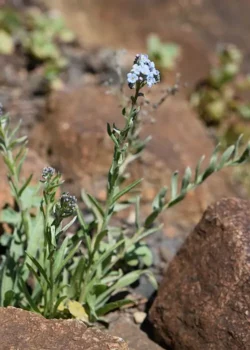
Alpine Forget-Me-Not: A Jewel of High Mountain Gardens
If you’ve ever hiked through the high alpine regions of the Rocky Mountains or Alaska and stumbled upon tiny clusters of brilliant blue flowers nestled among the rocks, you’ve likely encountered the enchanting alpine forget-me-not. This diminutive native wildflower might just be one of North America’s most charming—and challenging—garden additions.
Meet the Alpine Forget-Me-Not
Scientifically known as Eritrichium, the alpine forget-me-not is a true native treasure. This hardy perennial forb (that’s gardening speak for a non-woody flowering plant) creates compact cushions of silvery-green foliage topped with clusters of sky-blue flowers that seem to glow against rocky mountain landscapes.
Where You’ll Find This Mountain Marvel
The alpine forget-me-not is native throughout Alaska, Canada, and several western U.S. states including Colorado, Idaho, Montana, New Mexico, Oregon, Utah, Washington, and Wyoming. This plant has truly mastered the art of high-altitude living, thriving in some of the most extreme mountain environments across North America.
- Species observed
- No observations
Why Gardeners Fall in Love (And Sometimes Get Heartbroken)
There’s no denying the appeal of alpine forget-me-nots. These plants offer:
- Stunning blue flowers with bright yellow centers that create a striking contrast
- Compact, cushion-like growth perfect for rock gardens
- Incredible cold hardiness (USDA zones 2-5)
- Native status that supports local ecosystems
- Pollinator benefits for specialized alpine insects
However, here’s where things get tricky. Alpine forget-me-nots are notoriously difficult to grow outside their natural high-elevation habitat. These plants have evolved specifically for life above the treeline, where conditions are harsh, drainage is perfect, and temperatures rarely get too warm.
The Reality Check: Growing Conditions
If you’re thinking about adding alpine forget-me-nots to your garden, you’ll need to honestly assess whether you can provide what they need:
- Excellent drainage: Think rocky, gravelly soil that never stays wet
- Cool temperatures: Even summer heat can stress these mountain natives
- High elevation conditions: Low humidity and intense UV light
- Winter cold: They actually need freezing temperatures to thrive
- Full sun to partial shade: Bright light but not scorching heat
Who Should (And Shouldn’t) Grow Alpine Forget-Me-Nots
Perfect for: Experienced alpine gardeners, those living at high elevations, rock garden enthusiasts with specialized growing setups, and anyone willing to create carefully controlled growing conditions.
Not ideal for: Beginning gardeners, those living at sea level or in hot climates, anyone looking for easy-care plants, or gardeners without excellent drainage capabilities.
Planting and Care Tips for the Brave
If you’re determined to try growing alpine forget-me-nots, here’s how to give them their best shot:
- Create a scree garden with a mix of small rocks, gravel, and minimal organic matter
- Ensure drainage is absolutely perfect—standing water is death for these plants
- Consider growing in specialized alpine planters or raised rock gardens
- Provide protection from hot afternoon sun in lower elevations
- Water sparingly and only when soil is completely dry
- Avoid fertilizing—these plants are adapted to poor soils
Supporting Mountain Pollinators
When alpine forget-me-nots do bloom successfully, they provide nectar for specialized high-altitude pollinators including small native bees, flies, and occasional butterflies. These relationships have evolved over thousands of years and represent important connections in mountain ecosystems.
The Bottom Line
Alpine forget-me-nots are undeniably beautiful native plants that deserve our admiration and conservation efforts. However, they’re also among the most challenging wildflowers to cultivate successfully outside their natural range. If you’re not living at high elevation or don’t have experience with alpine plants, consider appreciating them in their natural habitat or supporting conservation efforts instead.
For those determined to try, approach alpine forget-me-nots as a fascinating gardening challenge rather than a guaranteed success. When they do thrive, these tiny mountain jewels create unforgettable moments of beauty that make all the effort worthwhile.