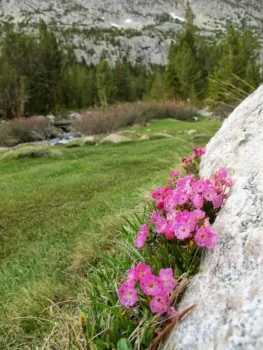
Alpine Laurel: A Charming Native Shrub for Wetland Gardens
If you’re looking for a petite, evergreen shrub that thrives in wet conditions and offers delicate spring blooms, alpine laurel (Kalmia microphylla) might just be the perfect addition to your native garden. This hardy little shrub brings year-round structure and seasonal color to challenging wet spots where many other plants struggle to survive.
What is Alpine Laurel?
Alpine laurel is a low-growing, evergreen perennial shrub that typically reaches just one foot in height at maturity. Don’t let its modest size fool you – this slow-growing beauty has a long lifespan and will reward patient gardeners with decades of reliable performance. Its multiple stems create a dense, decumbent (low-spreading) growth form that works wonderfully as a ground cover or accent plant.
The plant produces small but conspicuous purple flowers in late spring, creating a lovely contrast against its dark green, coarse-textured foliage. While the brown seeds that follow aren’t particularly showy, the evergreen leaves provide year-round interest in the garden.
Native Range and Distribution
Alpine laurel is proudly native to North America, with an impressive range spanning from Alaska down through western Canada and into the lower 48 states. You’ll find this adaptable shrub growing naturally across Alberta, British Columbia, Alaska, Manitoba, California, Ontario, Colorado, Yukon, Northwest Territories, Idaho, Montana, Nevada, Oregon, Utah, Washington, and Wyoming.
- Species observed
- No observations
Why Choose Alpine Laurel for Your Garden?
There are several compelling reasons to consider alpine laurel for your landscape:
- Native plant benefits: Supporting local ecosystems while requiring less maintenance than non-native alternatives
- Wetland specialist: Thrives in consistently moist to wet conditions where other shrubs fail
- Pollinator friendly: The purple spring blooms attract bees, butterflies, and other beneficial insects
- Low maintenance: Slow growth rate means minimal pruning, and it has low fertility requirements
- Cold hardy: Survives temperatures as low as -28°F, making it suitable for USDA zones 2-7
- Year-round interest: Evergreen foliage provides structure during winter months
Ideal Garden Settings
Alpine laurel shines in specific garden situations:
- Bog and wetland gardens: Perfect for rain gardens or naturally wet areas
- Rock gardens: Adds softness to harsh stone features
- Alpine and mountain gardens: Reflects its natural mountain habitat
- Naturalistic landscapes: Blends seamlessly into wild or woodland-style plantings
- Ground cover applications: Slowly spreads to cover difficult wet spots
Growing Conditions and Care
Success with alpine laurel depends on understanding its specific needs:
Soil Requirements
- Prefers coarse to medium-textured soils
- Requires consistent moisture – has low drought tolerance
- Thrives in acidic conditions (pH 6.0-7.3)
- Needs good drainage despite loving moisture
Light and Temperature
- Shade tolerant, making it versatile for various garden spots
- Requires at least 85 frost-free days
- Extremely cold hardy (survives -28°F)
Water and Climate
- Needs 12-20 inches of annual precipitation
- Medium moisture requirements – keep consistently moist
- Poor drought tolerance means irrigation may be necessary in dry climates
Planting and Establishment Tips
Alpine laurel can be challenging to establish, so patience is key:
- Propagation: Can be grown from seed, cuttings, or purchased as container plants (though commercial availability is limited)
- Planting density: Space plants for 1,700-2,700 per acre if mass planting
- Establishment: Expect slow initial growth and low seedling vigor
- Root development: Develops roots at least 12 inches deep
- Patience required: Very slow growth rate means it takes time to reach mature size
Special Considerations
Keep these important points in mind:
- Wetland status: Classified as an Obligate Wetland plant across its range, meaning it almost always occurs in wetlands
- Fire considerations: Not fire-resistant, so avoid planting in high fire-risk areas
- No hedge potential: Not suitable for formal hedging due to its growth habit
- Resprouts well: Can recover from damage by resprouting from the base
Is Alpine Laurel Right for Your Garden?
Alpine laurel is an excellent choice if you have consistently moist to wet areas in your garden and want to support native ecosystems. Its slow growth makes it ideal for gardeners who prefer low-maintenance plantings that won’t quickly outgrow their space. The combination of evergreen foliage, spring flowers, and pollinator benefits makes it a valuable addition to naturalistic landscapes.
However, if you have dry conditions or need quick results, alpine laurel might not be the best fit. Its specific moisture requirements and slow establishment make it better suited for patient gardeners with the right growing conditions.
For those lucky enough to have the perfect wet, acidic spot, alpine laurel offers a unique opportunity to grow a truly native plant that will provide decades of quiet beauty while supporting local wildlife and pollinators.