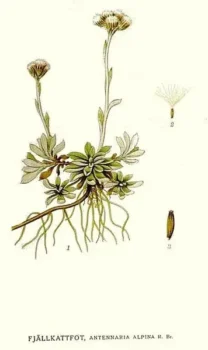
Alpine Pussytoes: A Hardy Native Ground Cover for Challenging Gardens
If you’re looking for a tough, low-maintenance ground cover that can handle harsh conditions while supporting native wildlife, alpine pussytoes (Antennaria alpina) might be exactly what your garden needs. This hardy little perennial has been quietly thriving in some of North America’s most challenging environments for thousands of years, and it’s ready to bring that same resilience to your landscape.
What is Alpine Pussytoes?
Alpine pussytoes is a native North American perennial forb that forms dense, cushion-like mats across the ground. Don’t let its delicate appearance fool you – this plant is incredibly tough. As a member of the aster family, it produces small clusters of white, papery flower heads that give it its whimsical common name. The flowers really do resemble tiny cat paws!
This low-growing plant lacks woody stems above ground, instead spreading through underground stolons to create attractive carpets of silvery-green, woolly foliage. It’s the kind of plant that looks perfectly at home nestled between rocks or cascading over stone walls.
Where Does Alpine Pussytoes Grow Naturally?
Alpine pussytoes is native to Alaska, Canada (including Alberta, British Columbia, Ontario, Quebec, Yukon, Northwest Territories, Nunavut, Labrador, and Newfoundland), Greenland, and parts of the lower 48 states, particularly Montana. It’s a true northern native that has adapted to thrive in arctic and alpine conditions.
- Species observed
- No observations
Why Choose Alpine Pussytoes for Your Garden?
There are several compelling reasons to consider this native gem:
- Extreme hardiness: Thriving in USDA zones 2-6, this plant can handle brutal winters and challenging growing conditions
- Low maintenance: Once established, it needs minimal care and can tolerate drought
- Native wildlife support: Early blooms provide nectar for small native bees, flies, and other pollinators when few other flowers are available
- Erosion control: Its mat-forming habit makes it excellent for stabilizing slopes and preventing soil erosion
- Year-round interest: The woolly, silver-green foliage provides texture and color even when not in bloom
Perfect Garden Settings
Alpine pussytoes shines in specific garden situations:
- Rock gardens and alpine gardens
- Xeriscape and drought-tolerant landscapes
- Naturalized areas and meadow gardens
- Mountain or high-elevation gardens
- Areas with poor, sandy, or rocky soil where other plants struggle
It’s particularly valuable in challenging spots where you need something beautiful but bulletproof.
Growing Conditions and Care
Alpine pussytoes prefers conditions that mimic its natural arctic and alpine habitat:
- Sunlight: Full sun is best, though it can tolerate some light shade
- Soil: Well-draining sandy or rocky soil; avoid heavy, moisture-retentive soils
- Water: Drought tolerant once established; prefers drier conditions
- Temperature: Loves cool temperatures and excellent cold tolerance
- Wetland status: Facultative upland plant that usually prefers non-wetland conditions
Planting and Care Tips
Getting alpine pussytoes established is straightforward if you remember its mountain origins:
- Plant in spring after the last frost
- Ensure excellent drainage – this is non-negotiable
- Space plants 6-12 inches apart; they’ll fill in naturally
- Water lightly during establishment, then reduce watering
- Avoid fertilizers – rich soil can actually harm this plant
- Allow it to spread naturally via stolons for best coverage
- Minimal pruning needed; just remove any dead material in spring
A Few Considerations
While alpine pussytoes is a fantastic native plant, it’s not right for every situation. It may struggle in hot, humid climates or areas with poor drainage. If you’re in a warmer zone or have heavy clay soil, you might want to consider other native ground covers better suited to your conditions.
Also, be patient – like many alpine plants, it can be slow to establish but will reward your patience with years of reliable performance.
Supporting Native Ecosystems
By choosing alpine pussytoes, you’re not just getting a beautiful, low-maintenance ground cover – you’re supporting native ecosystems. This plant provides early-season nectar when pollinators desperately need it, and its presence helps maintain the genetic diversity of native plant communities.
Plus, there’s something deeply satisfying about growing a plant that has thrived in North American landscapes since long before European settlement. Alpine pussytoes connects your garden to the wild spaces of the far north, bringing a piece of that rugged beauty to your own backyard.
If you have a challenging spot that needs a tough, attractive, and ecologically valuable ground cover, alpine pussytoes might be your perfect match. Just remember to give it the well-draining conditions it craves, and this hardy little native will reward you with years of reliable, beautiful performance.