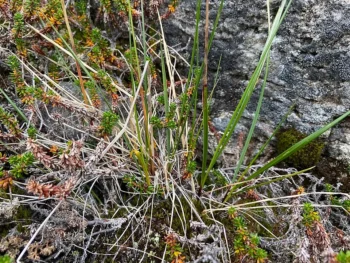
Alpine Sweetgrass: A Delicate Native Treasure for Cool Climate Gardens
If you’ve ever wandered through high mountain meadows and caught a whiff of something surprisingly sweet underfoot, you might have encountered alpine sweetgrass (Anthoxanthum monticola). This charming little native grass brings a touch of wilderness magic to the right garden setting, though it’s definitely not your typical lawn substitute!
What Makes Alpine Sweetgrass Special
Alpine sweetgrass is a perennial grass native to some pretty impressive territory across North America. You’ll find this hardy little plant naturally growing from the Arctic reaches of Alaska, Greenland, and northern Canada all the way down to the mountains of Maine, Montana, New Hampshire, New York, and Vermont. It’s also found throughout many Canadian provinces including Alberta, British Columbia, Manitoba, Ontario, Quebec, Yukon, Northwest Territories, and Nunavut, plus Labrador and Newfoundland.
- Species observed
- No observations
What sets this grass apart from its cousins is its delightfully sweet fragrance when the leaves are crushed or brushed against – hence the sweetgrass name. The scientific name Anthoxanthum monticola literally means mountain yellow flower, though you might also see it listed under the synonym Anthoxanthum monticolum.
Garden Appeal and Landscape Role
Let’s be honest – alpine sweetgrass won’t win any awards for showy blooms or dramatic height. This is a subtle beauty that forms small, delicate tufts and stays relatively low to the ground. Its charm lies in its fine texture, sweet scent, and the authentic alpine atmosphere it brings to specialized garden settings.
This grass shines in:
- Rock gardens that mimic mountain environments
- Alpine plant collections
- Native plant gardens focused on high-elevation species
- Naturalistic landscapes in cooler climates
- Ground cover in areas where you want something delicate and authentic
Growing Conditions: It’s All About Location
Here’s where things get interesting (and potentially challenging). Alpine sweetgrass isn’t called alpine for nothing – it genuinely prefers the kinds of conditions you’d find in high mountain meadows. We’re talking cool temperatures, well-drained but consistently moist soils, and plenty of fresh air.
This plant thrives in USDA hardiness zones 2-6, which tells you something important: it’s built for cold winters and cool summers. If you’re gardening in a hot, humid climate, alpine sweetgrass probably isn’t going to be happy in your landscape.
Ideal growing conditions include:
- Cool, moist, well-drained soils
- Full sun to partial shade
- Good air circulation
- Protection from intense summer heat
- Consistent moisture without waterlogging
Planting and Care Tips
If you’re determined to try growing alpine sweetgrass, fall seeding tends to work best, mimicking natural conditions where seeds overwinter and germinate with spring snowmelt. The grass can be tricky to establish, so patience is definitely a virtue here.
Once established, alpine sweetgrass is relatively low-maintenance, though it may struggle or decline in areas that get too hot. Think of it as a plant that rewards gardeners who can provide the right conditions rather than one that adapts to whatever you’ve got.
Wildlife and Ecological Benefits
As a wind-pollinated grass, alpine sweetgrass doesn’t offer much in the way of nectar for pollinators, but it does provide authentic habitat for wildlife species adapted to alpine environments. In its native range, it’s part of the complex ecosystem that supports various mountain-dwelling creatures.
Should You Grow Alpine Sweetgrass?
The honest answer depends entirely on where you garden and what you’re trying to achieve. If you live in a naturally cool climate (think northern New England, the northern Rockies, or similar), have well-drained soil, and are creating an alpine or native plant garden, alpine sweetgrass could be a delightful addition.
However, if you’re looking for an easy-care grass for hot climates, broad landscape use, or dramatic visual impact, you’ll probably want to explore other native options better suited to your specific conditions.
For the right gardener in the right location, alpine sweetgrass offers something special – a genuine piece of high country wilderness, complete with that sweet, nostalgic fragrance that connects your garden to some of North America’s most pristine wild places.