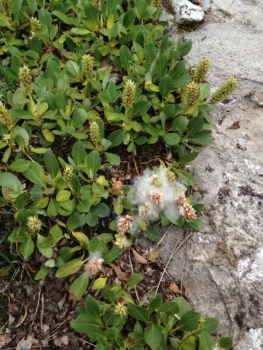
Alpine Willow: A Tough-as-Nails Native Shrub for Challenging Gardens
If you’ve ever wondered what thrives in those impossibly harsh mountain conditions where most plants throw in the towel, meet the alpine willow (Salix petrophila). This scrappy little native shrub laughs in the face of harsh winds, rocky soil, and bone-chilling temperatures that would make other plants pack their bags and head south.
What Exactly Is Alpine Willow?
Alpine willow is a perennial shrub that’s built for survival in some of North America’s most challenging environments. Unlike its towering willow cousins that grace riverbanks, this compact character typically stays well under 5 feet tall, often forming low, dense mats that hug the ground like a botanical security blanket.
This native plant species calls both Canada and the lower 48 United States home, though it’s definitely picky about its neighborhoods. You’ll find alpine willow naturally growing across Alberta, British Columbia, California, Colorado, Idaho, Montana, Nevada, New Mexico, Oregon, Utah, Washington, and Wyoming – basically anywhere the going gets tough in the western mountains.
- Species observed
- No observations
Why Your Garden Might Love Alpine Willow
Here’s where alpine willow really shines: it’s the plant equivalent of that friend who’s always up for an adventure, no matter how rough the conditions get. If you’re dealing with a challenging spot in your landscape – think rocky slopes, poor soil, or areas that get blasted by wind – this might be your new best friend.
Perfect Garden Situations for Alpine Willow
Alpine willow isn’t trying to win any beauty contests with flashy flowers or dramatic foliage, but it brings something even better to the table: reliability. This shrub excels in:
- Rock gardens where other plants struggle
- Alpine garden settings that mimic high-elevation conditions
- Slopes and areas needing erosion control
- Naturalized areas where you want low-maintenance native coverage
The Wildlife Connection
Don’t let alpine willow’s modest appearance fool you – it’s actually quite the pollinator magnet when it comes to early spring action. Those characteristic willow catkins emerge just when bees and other pollinators are desperate for their first taste of nectar after a long winter. It’s like opening the season’s first coffee shop for the insect world.
Growing Conditions That Make Alpine Willow Happy
The good news about alpine willow is that it’s refreshingly honest about what it needs – and what it needs isn’t much. This plant thrives in USDA hardiness zones 2 through 7, which means it can handle serious cold.
Here’s what alpine willow is looking for in a home:
- Full sun exposure (it’s used to those bright mountain conditions)
- Well-draining soil – soggy feet are a definite no-go
- Rocky or sandy soil conditions (it actually prefers what other plants consider poor soil)
- Once established, it’s remarkably drought tolerant
Planting and Care Tips
The beauty of alpine willow lies in its low-maintenance personality. Once you get it established, it’s pretty much a plant it and forget it situation – which is exactly what you want from a plant designed to survive in harsh mountain conditions.
For successful planting:
- Choose a location with excellent drainage – this is non-negotiable
- Don’t amend the soil with rich compost (alpine willow actually prefers lean conditions)
- Water regularly during the first growing season to help establishment
- After that, minimal care is needed – this plant is built for independence
Is Alpine Willow Right for Your Garden?
Alpine willow isn’t the plant for every garden situation, and that’s perfectly okay. If you’re looking for a showstopper with bold flowers or dramatic foliage, you might want to keep shopping. But if you have a challenging spot where other plants have failed, or if you’re creating a naturalized area that celebrates native resilience, alpine willow could be exactly what you need.
This tough little shrub brings authenticity to landscapes, especially if you’re trying to create something that feels connected to the wild mountain spaces of western North America. Plus, there’s something deeply satisfying about growing a plant that’s perfectly adapted to your region – it’s like having a piece of the local ecosystem right in your own backyard.