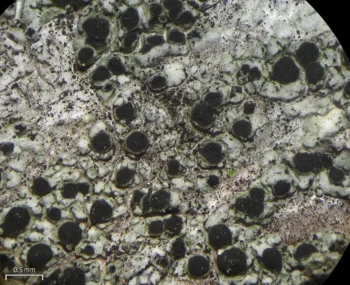
Amandinea milliaria: The Tiny Lichen That’s Actually a Garden Hero
Have you ever noticed small, crusty gray patches on the bark of trees in your yard and wondered what they were? Meet Amandinea milliaria, a fascinating lichen that’s probably been quietly doing good work in your garden without you even knowing it exists!
What Exactly Is Amandinea milliaria?
Before we dive in, let’s clear up a common misconception: Amandinea milliaria isn’t actually a plant at all! It’s a lichen, which is essentially a partnership between a fungus and algae working together. Think of it as nature’s ultimate roommate situation – the fungus provides structure and protection, while the algae produces food through photosynthesis.
This particular lichen was previously known by the scientific name Rinodina milliaria, so don’t be confused if you see it referenced that way in older field guides.
Where You’ll Find This Native North American
Amandinea milliaria is native to North America, where it naturally occurs across eastern and central regions. You’ll typically spot it making its home on tree bark in temperate woodland areas, though it can occasionally be found on rock surfaces too.
How to Identify Amandinea milliaria
Identifying this lichen is like becoming a nature detective! Here’s what to look for:
- Thin, crusty patches that appear grayish in color
- Grows directly on tree bark, forming tight adhesions to the surface
- Small size – individual patches are typically quite modest
- Smooth, somewhat chalky appearance when dry
Is This Lichen Beneficial for Your Garden?
Absolutely! While you might not have invited Amandinea milliaria to your garden party, it’s actually a wonderful guest to have around. Here’s why:
- Air quality indicator: Lichens are sensitive to air pollution, so their presence indicates you have relatively clean air in your garden
- Ecosystem health: They’re part of a healthy, balanced ecosystem and don’t harm the trees they grow on
- Natural beauty: They add subtle texture and natural character to tree bark
- Low maintenance: They require absolutely zero care from you!
Can You Grow Amandinea milliaria?
Here’s where things get interesting – you can’t actually plant or grow lichens like traditional garden plants. They establish themselves naturally when environmental conditions are just right. Trying to transplant or cultivate lichens typically doesn’t work because they’re incredibly sensitive to their specific environmental needs.
Instead of trying to grow them, the best approach is to create conditions that welcome them naturally:
- Maintain mature trees in your landscape
- Avoid using chemical treatments on tree bark
- Keep air quality as clean as possible
- Be patient – lichens grow very slowly
Living Harmoniously with Your Garden’s Lichens
If you discover Amandinea milliaria in your garden, consider yourself lucky! Rather than trying to remove it (which isn’t necessary anyway), simply appreciate it as a sign of a healthy garden ecosystem. These tiny organisms are harmless to trees and actually indicate that you’re doing something right with your environmental stewardship.
The next time you’re taking a stroll through your garden, take a moment to look closely at your tree bark. You might just spot these fascinating little partnerships quietly contributing to your garden’s natural balance. Who knew something so small could be such a positive garden indicator?