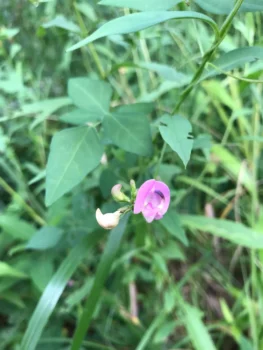
Amberique-Bean: A Delightful Native Trailing Wildflower for Your Garden
If you’re looking for a charming native plant that’s both beautiful and beneficial, let me introduce you to the amberique-bean (Strophostyles helvola). This delightful little trailing plant might not be a household name, but it deserves a spot in every native plant enthusiast’s garden. With its fuzzy stems, heart-shaped leaves, and clusters of purple-pink flowers, this annual wildflower brings both beauty and ecological value to any landscape.
What Exactly is Amberique-Bean?
Amberique-bean goes by several charming common names, including annual wooly-bean, trailing fuzzy-bean, trailing wild bean, and simply wild bean. As these names suggest, this plant has a distinctly fuzzy appearance and a trailing growth habit that makes it perfect for spilling over garden edges or climbing up simple supports.
This native annual belongs to the legume family, which means it has the fantastic ability to fix nitrogen in the soil – essentially fertilizing your garden naturally! The plant produces small but numerous purple to pink flowers arranged in clusters, followed by small bean pods that give it its bean moniker.
Where Does Amberique-Bean Call Home?
One of the best things about amberique-bean is its impressive native range. This plant is truly North American, native to both Canada and the lower 48 states. You can find it naturally growing across a vast territory including Alabama, Arkansas, Connecticut, Delaware, Florida, Georgia, Illinois, Indiana, Iowa, Kansas, Kentucky, Louisiana, Maine, Maryland, Massachusetts, Michigan, Minnesota, Mississippi, Missouri, Nebraska, New Jersey, New York, North Carolina, Ohio, Oklahoma, Pennsylvania, Rhode Island, South Carolina, South Dakota, Tennessee, Texas, Virginia, West Virginia, Wisconsin, and the provinces of Ontario and Quebec.
- Species observed
- No observations
Why Your Garden Will Love Amberique-Bean
There are several compelling reasons to consider adding this native beauty to your landscape:
- Pollinator magnet: The small but abundant flowers attract bees, butterflies, and other beneficial insects throughout the growing season
- Soil improvement: As a legume, it naturally fixes nitrogen, improving soil fertility for neighboring plants
- Low maintenance: Once established, this drought-tolerant annual requires minimal care
- Versatile growth: Works beautifully as ground cover or can trail over walls and climb simple supports
- Native wildlife support: Provides habitat and food sources for local wildlife
- Self-seeding: Will reliably return each year through natural reseeding
Perfect Garden Situations for Amberique-Bean
This adaptable native thrives in several garden styles and situations:
- Naturalized gardens: Perfect for wildflower meadows and prairie restorations
- Native plant gardens: An excellent choice for purists wanting only indigenous species
- Informal landscapes: Adds casual charm to cottage gardens and relaxed planting schemes
- Rock gardens: Can trail beautifully over stones and walls
- Rain gardens: Its facultative wetland status means it can handle both wet and dry conditions
Growing Conditions and Care
One of amberique-bean’s greatest assets is its adaptability. This resilient native can handle a range of growing conditions, making it perfect for both novice and experienced gardeners.
Light requirements: Thrives in full sun to partial shade, though flowering may be more prolific in sunnier locations.
Soil preferences: Prefers well-drained soils and performs particularly well in sandy or loamy conditions. It’s quite drought tolerant once established, making it ideal for water-wise gardening.
Wetland adaptability: Depending on your region, amberique-bean shows different wetland tolerances. In most areas, it’s classified as facultative, meaning it can thrive in both wet and dry conditions – a true sign of its adaptability!
Planting and Care Tips
Growing amberique-bean successfully is refreshingly straightforward:
- Seeding: Direct seed in spring after the danger of frost has passed
- Spacing: Allow adequate room for trailing growth
- Watering: Water regularly during establishment, then reduce as the plant becomes drought tolerant
- Fertilizing: Generally unnecessary – remember, this plant actually improves soil fertility!
- Maintenance: Minimal care required; simply allow the plant to complete its life cycle for natural reseeding
Hardiness and Seasonal Considerations
As an annual, amberique-bean can be grown across USDA hardiness zones 3-9. Since it completes its entire life cycle in one growing season, winter hardiness isn’t a concern – it’s more about having a long enough growing season for the plant to flower, set seed, and complete its cycle.
The Bottom Line
Amberique-bean represents everything wonderful about native plants: it’s beautiful, beneficial, and remarkably easy to grow. Whether you’re creating a wildlife habitat, establishing a native plant garden, or simply want to add some native charm to your landscape, this trailing beauty deserves serious consideration. Its ability to support pollinators, improve soil, and provide natural beauty with minimal input makes it a true garden winner.
Best of all, once you plant amberique-bean, you’re likely to have it as a garden companion for years to come, thanks to its reliable self-seeding habit. It’s one of those delightful plants that gives back far more than it takes – exactly what every gardener hopes to find!