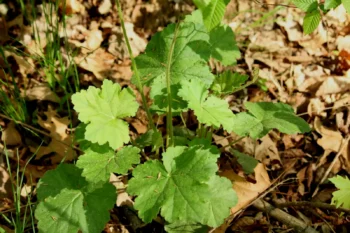
American Alumroot: A Native Gem for Your Shade Garden
If you’re looking for a reliable, attractive native perennial that thrives in shade, let me introduce you to American alumroot (Heuchera americana). This charming little plant might not be the flashiest flower in your garden, but it’s definitely one of the most dependable workhorses you can add to your landscape.
What Makes American Alumroot Special?
American alumroot is a native perennial that’s been quietly beautifying North American landscapes long before any of us started gardening. As a true native, it’s naturally adapted to our climate and soil conditions, which means less work for you and more benefits for local wildlife.
This herbaceous perennial belongs to the forb family – basically, it’s a non-woody plant that dies back in winter and returns each spring. What sets it apart from its more popular cousin, coral bells, is its understated elegance and superior tolerance for challenging growing conditions.
Where American Alumroot Calls Home
This native beauty has quite an impressive range! You’ll find American alumroot growing naturally across much of eastern and central North America, including Alabama, Arkansas, Connecticut, Delaware, District of Columbia, Georgia, Illinois, Indiana, Iowa, Kansas, Kentucky, Louisiana, Maryland, Michigan, Mississippi, Missouri, Nebraska, New Jersey, New York, North Carolina, Ohio, Oklahoma, Pennsylvania, South Carolina, Tennessee, Virginia, West Virginia, and Ontario, Canada.
- Species observed
- No observations
The Look: Subtle Beauty That Lasts
Don’t expect American alumroot to shout for attention – its beauty is more of a gentle whisper. The plant forms attractive mounds of heart-shaped leaves that are typically green with striking silver markings and purple undersides. This foliage provides year-round interest and creates a lovely textural contrast in shade gardens.
In late spring to early summer, delicate sprays of small, bell-shaped flowers appear on slender stems that can reach 1-3 feet tall. The flowers are typically white to greenish – not showy, but charming in their own quiet way.
Perfect Spots for Planting
American alumroot is incredibly versatile when it comes to garden roles:
- Groundcover in shade gardens
- Border edging along pathways
- Rock garden specimen
- Woodland garden understory
- Native plant garden anchor
- Mass plantings for naturalized areas
It’s particularly well-suited for shade gardens, woodland gardens, and naturalized landscapes where you want something that looks intentional but not overly formal.
Growing Conditions: Easy Does It
Here’s where American alumroot really shines – it’s remarkably adaptable! This plant prefers partial to full shade and well-draining soil, but it’s not particularly fussy about soil type. It can handle everything from sandy loam to clay, though it does best with slightly acidic to neutral pH levels.
As for water, American alumroot likes moderate moisture. It’s classified as facultative upland across all regions, which means it usually grows in non-wetland areas but can tolerate occasional wet conditions. Once established, it’s quite drought-tolerant.
The plant is hardy in USDA zones 4-9, making it suitable for most of the continental United States.
Planting and Care Tips
Getting American alumroot established in your garden is refreshingly straightforward:
- When to plant: Spring or fall are ideal times
- Spacing: Plant 12-18 inches apart for groundcover effect
- Watering: Water regularly during the first growing season, then as needed
- Mulching: Apply a 2-3 inch layer of organic mulch to retain moisture and suppress weeds
- Maintenance: Very low maintenance once established
- Division: Divide every 3-4 years in spring or fall to maintain vigor
Benefits for Pollinators and Wildlife
While American alumroot might seem understated, it’s actually quite valuable for local ecosystems. The small flowers attract various pollinators, including native bees, butterflies, and other beneficial insects. It’s not a major nectar source, but every little bit helps in supporting pollinator populations.
Why Choose American Alumroot?
In a world of high-maintenance garden plants, American alumroot offers something refreshing: reliability without drama. It won’t overwhelm your garden with aggressive spreading, it won’t demand constant attention, and it won’t sulk if conditions aren’t perfect.
Plus, by choosing this native plant, you’re supporting local ecosystems and reducing the need for intensive garden inputs. It’s a small but meaningful step toward more sustainable gardening practices.
If you’re building a shade garden, creating a woodland landscape, or simply want to add some native plants to your collection, American alumroot deserves serious consideration. It might not be the star of the show, but it’s definitely the kind of reliable supporting actor that makes everything else look better.