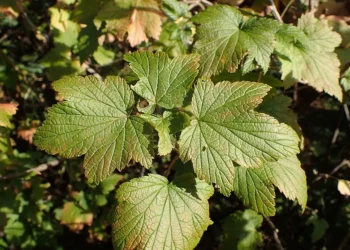
American Black Currant: A Native Treasure for Your Garden
If you’re looking for a low-maintenance native shrub that offers something for both you and local wildlife, meet the American black currant (Ribes americanum). This unassuming perennial shrub might not win any flashy flower contests, but it’s the kind of dependable garden companion that quietly delivers year after year.
What Makes American Black Currant Special?
American black currant is a multi-stemmed woody shrub that typically grows 3 feet tall and can reach up to 15 feet under ideal conditions, though most garden specimens stay much more compact. As a true North American native, this plant has been supporting local ecosystems long before any of us picked up a garden spade.
The shrub forms attractive thickets over time, making it perfect for naturalized areas where you want some structure without constant fussing. Its medium-textured green foliage provides a nice backdrop for showier plants, while its erect growth habit adds vertical interest to garden beds.
Where Does It Call Home?
This adaptable native has one of the most impressive geographic ranges you’ll find. American black currant grows naturally across Canada (Alberta, Manitoba, New Brunswick, Nova Scotia, Ontario, Quebec, and Saskatchewan) and throughout much of the United States, including Colorado, Connecticut, Delaware, Illinois, Indiana, Iowa, Kentucky, Maine, Maryland, Massachusetts, Michigan, Minnesota, Missouri, Montana, Nebraska, New Hampshire, New Jersey, New Mexico, New York, North Dakota, Ohio, Pennsylvania, Rhode Island, South Dakota, Vermont, Virginia, West Virginia, Wisconsin, and Wyoming – plus Washington D.C.!
- Species observed
- No observations
Garden Appeal and Design Role
While American black currant won’t stop traffic with showy blooms, it offers subtle charm that grows on you. In early spring, the shrub produces small yellow flowers that, while not particularly conspicuous, provide crucial early-season nectar for pollinators emerging from winter. Come summer, these flowers develop into small black berries that wildlife absolutely love.
This shrub works beautifully in several garden roles:
- **Wildlife gardens** – The berries feed birds and small mammals
- **Rain gardens** – Its facultative wetland status means it handles both wet and moderately dry conditions
- **Woodland edges** – Perfect for transitional areas between lawn and forest
- **Native plant collections** – Adds authentic regional character
- **Edible landscapes** – The berries are edible for humans too, though tart
Growing Conditions: Pretty Easygoing
One of the best things about American black currant is how adaptable it is. This shrub tolerates a wide range of growing conditions, making it perfect for those tricky spots in your garden.
**Soil preferences:** It’s not picky! American black currant adapts to coarse, medium, and fine-textured soils, with a pH range from 5.0 to 7.8. Whether you have sand, clay, or something in between, this shrub will likely be happy.
**Water needs:** Thanks to its facultative wetland status, this plant usually prefers moist conditions but can handle some drought once established. It’s particularly valuable in areas that occasionally flood or stay soggy.
**Sun requirements:** While it can handle full sun, American black currant often performs better with some afternoon shade, especially in hotter climates.
Climate and Hardiness
American black currant is incredibly cold-hardy, tolerating temperatures as low as -46°F, making it suitable for USDA hardiness zones 3-7. It needs at least 128 frost-free days, so extremely short growing seasons might be challenging.
The shrub handles precipitation ranges from 12 to 60 inches annually, making it adaptable to both drier and wetter regions within its range.
Planting and Care Tips
**Getting started:** American black currant is typically propagated by cuttings rather than seed, so you’ll likely find nursery-grown plants. Plant in spring or early fall when temperatures are moderate.
**Spacing:** If you’re planting multiple shrubs, space them 4-6 feet apart. For naturalized plantings, you can plant 1,280 to 5,120 plants per acre, depending on your goals.
**Maintenance:** This is refreshingly low-maintenance. The shrub has a relatively short lifespan compared to trees, but it spreads at a moderate rate to form new colonies. It doesn’t require pruning, though you can shape it if desired.
**Winter care:** The shrub loses its leaves in winter (no leaf retention), becoming porous, but it’s completely hardy in its range.
Wildlife and Pollinator Benefits
While specific wildlife data wasn’t available, American black currant’s early spring flowers provide crucial nectar when few other plants are blooming. The black berries that follow feed various bird species and small mammals throughout the summer and early fall.
As a native plant, it supports local insect populations that have co-evolved with it, creating a more robust ecosystem in your garden.
Is American Black Currant Right for Your Garden?
Consider American black currant if you:
- Want a low-maintenance native shrub
- Have a spot with variable moisture conditions
- Are creating wildlife habitat
- Need something for partial shade
- Want to support early-season pollinators
- Appreciate subtle beauty over flashy displays
This might not be your best choice if you need year-round structure (it’s deciduous), want showy flowers, or need something for very dry, desert-like conditions.
American black currant proves that sometimes the best garden plants are the ones that simply do their job well without requiring constant attention. It’s a perfect example of how native plants can provide both ecological benefits and garden beauty – sometimes you just need to look a little closer to appreciate what they offer.