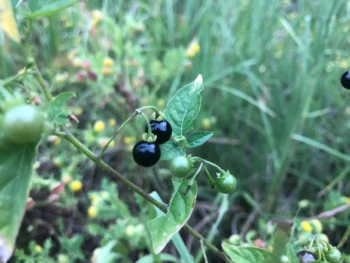
American Black Nightshade: A Complex Native with a Weedy Reputation
Meet American black nightshade (Solanum americanum), a plant that’s sparked plenty of confusion among gardeners and botanists alike. Also known by colorful names like apple of Sodom, glossy nightshade, and popolo, this member of the nightshade family has a complicated relationship with North American gardens.
What Exactly Is American Black Nightshade?
American black nightshade is a forb—essentially an herbaceous plant without woody stems—that can live as either an annual or perennial depending on your climate. Don’t let its humble appearance fool you; this adaptable little plant has managed to establish itself across a remarkably wide range of territories.
Where Does It Call Home?
Here’s where things get interesting (and a bit confusing). According to botanical records, Solanum americanum appears to be native to the lower 48 states, Hawaii, Puerto Rico, the U.S. Virgin Islands, and Navassa Island. However, it’s also listed as non-native in Canada, where it reproduces without human help. Currently, you can find this plant growing in Alabama, Arizona, California, Colorado, Florida, Georgia, Hawaii, Kansas, Louisiana, Mississippi, Missouri, Nevada, New Mexico, Oregon, Texas, Washington, and several U.S. territories.
- Species observed
- No observations
Should You Grow American Black Nightshade?
This is where we need to have an honest conversation. While American black nightshade might be native to many U.S. regions, it’s generally considered more of a weedy volunteer than a garden-worthy specimen. Here’s why you might want to think twice before adding it to your landscape:
- It tends to show up uninvited in disturbed soils and waste areas
- The plant has a somewhat scraggly appearance that doesn’t lend itself well to formal garden design
- Its small white flowers and black berries, while interesting, aren’t particularly showy
- It can self-seed readily, potentially becoming weedy
Wildlife and Ecological Benefits
On the positive side, American black nightshade does offer some wildlife value. Large animals use it for 2-5% of their diet with sparse cover benefits, while terrestrial birds rely on it for 5-10% of their diet, though they rarely use it for nesting cover. The small flowers can attract some pollinators, but there are certainly more spectacular native options for supporting bees and butterflies.
Growing Conditions and Care
If this plant does appear in your garden (and it very well might on its own), you’ll find it’s quite the survivor. American black nightshade typically prefers:
- Disturbed or cultivated soils
- Full sun to partial shade
- Various soil types—it’s not particularly picky
- Areas with regular moisture, though it’s fairly drought-tolerant once established
Regarding wetlands, this plant usually sticks to drier ground across most regions, earning a Facultative Upland status in most areas, meaning it typically grows in non-wetland areas but can occasionally pop up in wetter spots.
Better Native Alternatives
Instead of encouraging American black nightshade in your garden, consider these more garden-worthy native alternatives that offer similar or better benefits:
- Wild bergamot (Monarda fistulosa) for pollinator support
- Purple coneflower (Echinacea purpurea) for birds and beauty
- Black-eyed Susan (Rudbeckia fulgida) for reliable color and wildlife value
- Native elderberry species for birds that love dark berries
The Bottom Line
American black nightshade occupies an interesting ecological niche as a native plant that behaves like a weed. While it’s not invasive or harmful to grow where it’s native, it’s probably not the first choice for most gardeners looking to create beautiful, wildlife-friendly landscapes. If it shows up in your garden naturally, you can leave it for its modest wildlife benefits—just be prepared to manage its enthusiastic self-seeding habits.
For most gardening goals, you’ll find much more rewarding native plants that offer superior aesthetics, wildlife value, and garden performance. Save your garden real estate for native showstoppers that will truly make your landscape shine!