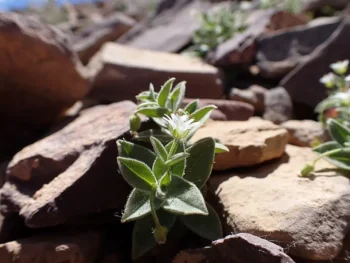
American Chickweed: A Delicate Native Groundcover for Cool Climate Gardens
If you’re looking for a charming, low-growing native plant that brings delicate beauty to your garden, American chickweed (Stellaria americana) might just be the hidden gem you’ve been searching for. This petite perennial forb offers a subtle elegance that’s perfect for gardeners who appreciate the quieter side of native landscaping.
What is American Chickweed?
American chickweed is a native perennial forb that belongs to the carnation family. Unlike its weedy cousins, this native species brings intentional beauty to the landscape with its mat-forming growth habit and delicate white flowers. As a forb, it’s an herbaceous plant that lacks woody stems, making it a soft, approachable addition to any native garden.
The plant is also known by several botanical synonyms, including Alsine americana and has been reclassified multiple times throughout botanical history—a testament to the evolving understanding of plant relationships.
Where Does American Chickweed Naturally Grow?
This charming native has a relatively limited natural range, primarily found in Montana and Alberta, Canada. Its restricted distribution makes it a special addition to gardens within or near its native territory, where it has adapted to local growing conditions over thousands of years.
- Species observed
- No observations
Why Grow American Chickweed?
There are several compelling reasons to consider American chickweed for your native garden:
- True native status: Supporting local ecosystems by growing plants indigenous to your region
- Low-maintenance appeal: Once established, native plants typically require less water and care
- Delicate beauty: Small white star-shaped flowers provide subtle, naturalistic charm
- Groundcover potential: Mat-forming habit helps suppress weeds naturally
- Pollinator support: Small flowers can attract tiny native pollinators and beneficial insects
Garden Design and Landscape Use
American chickweed works beautifully in several garden settings:
- Native plant gardens: Perfect for authentic regional plantings
- Rock gardens: The delicate texture contrasts nicely with stone elements
- Alpine gardens: Well-suited to cooler, mountain-inspired landscapes
- Naturalized areas: Ideal for low-maintenance, natural-looking spaces
- Groundcover applications: Use in areas where you want gentle, spreading coverage
Growing Conditions and Care
While specific growing requirements for American chickweed aren’t extensively documented, we can make educated assumptions based on its native habitat and plant family characteristics:
- USDA Hardiness Zones: Likely zones 3-6, based on its northern native range
- Light requirements: Probably thrives in partial shade to full sun
- Soil preferences: Well-draining soil, possibly with some organic matter
- Moisture needs: Likely prefers consistent but not waterlogged conditions
- Maintenance: Low-maintenance once established
Planting and Propagation Tips
Since American chickweed has a limited native range, finding this plant may require some detective work:
- Contact native plant societies in Montana and Alberta for potential sources
- Check with specialty native plant nurseries in the region
- Consider seed collection from wild populations (with proper permissions and sustainable practices)
- Start from seed in early spring or fall
- Allow plants to naturalize and self-seed once established
Important Considerations
Given its limited natural distribution, American chickweed should be sourced responsibly. Always purchase from reputable native plant nurseries or collect seeds ethically with landowner permission. Avoid disturbing wild populations, and never collect from protected areas.
If you’re outside its native range, consider other native chickweed species or similar groundcover plants native to your specific region instead.
The Bottom Line
American chickweed offers garden enthusiasts within its native range a chance to grow a truly local species that brings delicate charm and ecological authenticity to their landscapes. While it may not be the showiest plant in your garden, its quiet beauty and native status make it a valuable addition for those committed to supporting local ecosystems.
Just remember to source it responsibly and consider it a special addition to your native plant collection—one that connects your garden directly to the natural heritage of the northern Great Plains and Canadian prairies.