American Cupscale: A Native Wetland Grass for Specialized Gardens
If you’re looking to create a thriving wetland garden or restore a marshy area on your property, American cupscale might just be the unsung hero you need. This native perennial grass may not win any beauty contests, but it’s a wetland warrior that plays a crucial role in aquatic ecosystems across much of the eastern United States.
What is American Cupscale?
American cupscale (Sacciolepis striata) is a native perennial grass that’s perfectly adapted to life in wet places. Don’t let its humble appearance fool you – this rhizomatous grass is a wetland specialist that’s been quietly doing important ecological work across the southeastern states for centuries.
You might also see this plant listed under its historical names, including Holcus striatus or Panicum aquaticum, but American cupscale is the name that’s stuck in modern usage.
Where Does American Cupscale Grow?
This adaptable grass calls a large swath of the eastern United States home, naturally occurring from Maine down to Florida and west to Texas and Oklahoma. You’ll also find it growing in Puerto Rico. It thrives in states including Alabama, Arkansas, Delaware, Georgia, Louisiana, Maryland, Massachusetts, Mississippi, Missouri, New Jersey, North Carolina, South Carolina, Tennessee, and Virginia.
- Species observed
- No observations
A Word of Caution: Rarity Status
Before you rush to plant American cupscale, there’s something important to know: this grass is considered endangered in New Jersey and is listed as a species of special concern in the Pinelands and Highlands regions. If you’re planning to grow it, make sure you source your plants or seeds responsibly from reputable native plant nurseries rather than wild-collecting.
Why Grow American Cupscale?
Let’s be honest – American cupscale isn’t going to wow your neighbors with showy flowers or stunning fall color. Its small purple flowers are inconspicuous, and its coarse green foliage is purely functional. So why consider it for your garden?
The answer lies in its specialized role as a wetland plant. American cupscale is what botanists call an obligate wetland species, meaning it almost always occurs in wetlands. This makes it invaluable for:
- Wetland restoration projects
- Rain garden plantings
- Pond and stream bank stabilization
- Creating habitat for wetland wildlife
- Managing areas with persistent moisture problems
What Does American Cupscale Look Like?
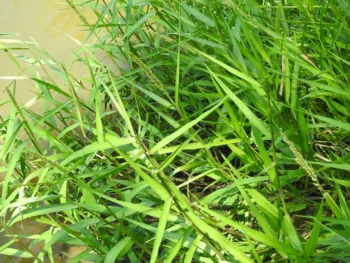
American cupscale is a relatively compact grass, reaching about 3 feet tall at maturity. It grows in an upright, erect form and spreads via underground rhizomes, making it effective for covering wet ground. The plant has a moderate growth rate and typically lives for a relatively short lifespan compared to other perennial grasses.
During its active growing season in summer, you’ll notice its coarse-textured green foliage. The small purple flowers appear in early summer, followed by purple seeds from summer through fall. Don’t expect the flowers to steal the show – they’re wind-pollinated and quite modest in appearance.
Growing Conditions and Care
American cupscale is wonderfully low-maintenance once you understand its needs. Think of it as the aquatic equivalent of a desert cactus – it’s perfectly adapted to its preferred environment but won’t tolerate conditions outside its comfort zone.
Moisture: This is non-negotiable. American cupscale needs consistently moist to wet soil. It has medium anaerobic tolerance, meaning it can handle some flooding.
Sunlight: Full sun is preferred, though it can tolerate some light shade. It’s listed as shade intolerant, so avoid heavily shaded areas.
Soil: Adaptable to medium and fine-textured soils, but not suitable for coarse, sandy soils. It prefers slightly acidic to neutral soil with a pH between 5.0 and 7.3.
Hardiness: Based on its natural distribution, American cupscale is hardy in USDA zones 6-10, tolerating temperatures down to about -18°F.
Climate: Needs at least 180 frost-free days and annual precipitation between 22-79 inches.
Planting and Propagation
Unfortunately, American cupscale isn’t commercially available from most nurseries, which makes sourcing a bit challenging. However, it can be propagated through several methods:
- Seeds (400,000 seeds per pound!)
- Cuttings
- Sod division
The seeds spread rapidly and have high seedling vigor, while the plant also spreads quickly through its rhizomatous root system. If you can source seeds, they don’t require cold stratification, making them relatively easy to start.
Is American Cupscale Right for Your Garden?
American cupscale is definitely a specialist plant. Consider it if you:
- Have consistently wet or marshy areas in your landscape
- Are working on wetland restoration
- Need erosion control for stream or pond banks
- Want to support native wetland ecosystems
- Are creating a rain garden or bioswale
Skip American cupscale if you:
- Have well-drained or dry soils
- Want a showy ornamental grass
- Are looking for drought-tolerant plants
- Garden in heavily shaded areas
The Bottom Line
American cupscale may not be the star of your garden, but it’s an important supporting player in wetland ecosystems. If you have the right growing conditions – namely, consistently wet soil and plenty of sun – this native grass can help you create authentic wetland habitat while providing valuable erosion control. Just remember to source it responsibly, especially given its endangered status in some areas. Sometimes the most important plants in our gardens are the ones working quietly behind the scenes!