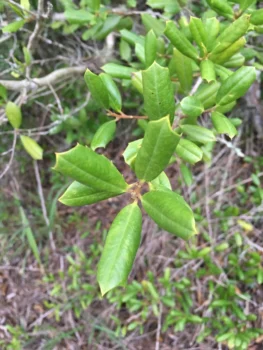
American Holly: Florida’s Sandy Soil Native (Ilex opaca var. arenicola)
If you’re gardening in Florida and looking for a native evergreen that can handle sandy soils, meet Ilex opaca var. arenicola – a special variety of American holly that’s perfectly adapted to the Sunshine State’s challenging growing conditions. This isn’t your typical American holly; it’s a Florida native that knows how to thrive where many other plants struggle.
What Makes This Holly Special?
This particular variety of American holly is what botanists call a sand-loving plant (that’s what arenicola means). It’s a native Florida shrub that typically grows as a multi-stemmed woody plant, usually staying under 13-16 feet tall. As a perennial evergreen, it provides year-round structure and interest to your landscape.
You might also see this plant referenced by its scientific synonyms: Ilex arenicola, Ilex cumulicola, or Ilex pygmaea – but they’re all referring to the same wonderful native holly.
Where Does It Grow Naturally?
This holly variety is endemic to Florida, making it a true local native. It’s particularly well-suited to the state’s scrub habitats and sandy soils that challenge so many other plants.
- Species observed
- No observations
Why Choose This Native Holly?
Here’s why Florida gardeners should consider adding this native holly to their landscapes:
- True Florida native: Perfectly adapted to local conditions and supports native ecosystems
- Sandy soil specialist: Thrives in the challenging sandy soils that many plants can’t handle
- Evergreen structure: Provides year-round greenery and landscape backbone
- Low maintenance: Once established, native plants typically require less water and care
- Wildlife value: As a native holly, it likely provides berries for birds and habitat for local wildlife
Garden Design and Landscape Use
This holly works beautifully in:
- Native Florida landscapes and restoration projects
- Xeriscapes and water-wise gardens
- Naturalized areas and wildlife gardens
- Sandy soil problem areas where other plants struggle
- Mixed native shrub borders
Important Conservation Note
This variety has a conservation status that suggests it may be uncommon in the wild. If you’re interested in growing this native beauty, make sure to source your plants from reputable native plant nurseries that propagate their stock responsibly rather than collecting from wild populations.
Growing Tips for Success
While specific growing requirements for this variety aren’t widely documented, here are some general guidelines based on its native habitat:
- Soil: Well-draining sandy soils (its specialty!)
- Sun exposure: Likely adaptable to various light conditions typical of Florida scrub habitats
- Water: Once established, should be quite drought-tolerant
- Climate: Best suited for Florida’s climate zones
Finding and Planting Your Holly
Since this is a specialized native variety, you’ll want to contact Florida native plant societies or specialized native plant nurseries to source your plants. When you do find them, plant them in well-draining sandy soil and give them time to establish their root systems.
Remember, native plants often take a season or two to really get going, but once they’re established, they’re typically much more resilient and lower-maintenance than non-native alternatives.
The Bottom Line
Ilex opaca var. arenicola is a fantastic choice for Florida gardeners who want to embrace native plants and work with their challenging sandy soils rather than against them. While it may take some hunting to find this special variety, the effort is worth it for a truly local native that’s perfectly adapted to Florida conditions. Just remember to source responsibly and support nurseries that propagate rather than collect from the wild!