American Licorice: A Sweet Addition to Your Native Plant Garden
If you’re looking for a hardy native perennial that can handle tough conditions while adding subtle beauty to your landscape, American licorice (Glycyrrhiza lepidota) might just be the plant you didn’t know you needed. This unassuming member of the legume family has been quietly thriving across North America for centuries, and it’s ready to bring its understated charm to your garden.
What is American Licorice?
American licorice is a native perennial forb that grows as a herbaceous plant without significant woody tissue. Don’t let the forb classification intimidate you – it simply means this is a flowering plant that dies back to the ground each winter and returns fresh each spring. Standing up to 4 feet tall, this plant forms a single crown and grows at a moderate pace, making it a well-behaved addition to most garden settings.
You might also encounter this plant listed under its synonyms Glycyrrhiza glutinosa or various botanical variations, but they’re all referring to the same dependable native species.
Where Does American Licorice Call Home?
This adaptable native has one of the most impressive geographical ranges you’ll find in North American plants. American licorice naturally grows across an enormous swath of the continent, from Canadian provinces like Alberta, British Columbia, Manitoba, Ontario, and Saskatchewan, down through an impressive list of U.S. states including Arizona, Arkansas, California, Colorado, Idaho, Illinois, Indiana, Iowa, Kansas, Minnesota, Missouri, Montana, Nebraska, Nevada, New Mexico, North Dakota, Oklahoma, Oregon, South Dakota, Texas, Utah, Washington, Wisconsin, and Wyoming – plus scattered populations in Connecticut, Maine, Massachusetts, New York, Pennsylvania, Rhode Island, and Virginia.
- Species observed
- No observations
This wide distribution tells us something important: American licorice is remarkably adaptable and can thrive in diverse climates and conditions, making it suitable for USDA hardiness zones 3 through 8.
Garden Appeal and Landscape Role
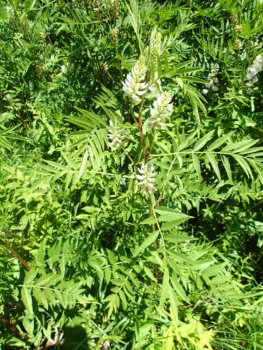
While American licorice won’t win any flashy flower contests, its subtle beauty has its own appeal. The plant produces small white flowers arranged in dense, conspicuous spikes during late spring, creating a delicate display that pollinators absolutely adore. The coarse-textured green foliage consists of compound leaves that provide nice contrast in mixed plantings, and the brown seed pods that follow the flowers add autumn interest to the garden.
In landscape design, American licorice shines as a supporting player rather than a star. It works beautifully in:
- Prairie and meadow gardens
- Naturalized areas where you want low-maintenance natives
- Wildlife habitat gardens
- Areas with challenging soil conditions
- Slopes where erosion control is needed
Growing Conditions: Where American Licorice Thrives
One of the best things about American licorice is its adaptability to different growing conditions. Here’s what this accommodating native prefers:
Soil: While it can’t handle coarse, sandy soils, American licorice does well in fine-textured and medium-textured soils. It’s quite tolerant of different soil types and can handle pH levels from 5.5 to 8.0.
Moisture: Here’s where things get interesting – American licorice has different moisture preferences depending on your region. In arid western areas, it can tolerate both wet and dry conditions. In most other regions, it typically prefers non-wetland conditions but can adapt to occasional wet periods. The plant has high moisture use and high tolerance for anaerobic conditions, making it surprisingly versatile.
Sun/Shade: American licorice tolerates intermediate shade levels, so it can work in partial shade to full sun locations.
Climate: This tough native can handle temperatures as low as -38°F and requires at least 120 frost-free days. It prefers areas with 14-40 inches of annual precipitation.
Planting and Care Tips
Getting American licorice established in your garden is refreshingly straightforward:
Propagation: Seeds are the way to go with this plant – it doesn’t propagate well through other methods. With about 52,688 seeds per pound, a little goes a long way! Seeds don’t require cold stratification, and seedlings show medium vigor once they get started.
Planting: American licorice is currently only available through contracting (specialty native plant suppliers), so you’ll need to plan ahead. Plant in spring after the last frost date in your area.
Care: Once established, this plant is remarkably low-maintenance. It has a moderate growth rate and doesn’t require frequent fertilization (medium fertility requirements are sufficient). The plant has low nitrogen-fixing ability, which is typical for legumes growing in less-than-ideal conditions.
Seasonal Interest: Active growth occurs in spring and summer, with conspicuous fall color. The plant doesn’t retain its leaves through winter but provides structural interest through its seed pods.
Wildlife and Pollinator Benefits
American licorice earns its place in wildlife gardens through its flowers, which bloom during late spring and attract various pollinators including native bees and butterflies. As a member of the legume family, it provides the protein-rich pollen that many specialized native bees require for their young.
The seeds persist on the plant and can provide food for birds, while the overall plant structure offers habitat for beneficial insects throughout the growing season.
Is American Licorice Right for Your Garden?
American licorice is an excellent choice if you:
- Want to support native pollinators and wildlife
- Need a plant for challenging growing conditions
- Appreciate subtle, natural beauty over flashy displays
- Are creating a prairie or meadow garden
- Want a low-maintenance native that won’t take over
However, you might want to consider other options if you:
- Have very sandy, coarse soil
- Need a plant with showy, colorful flowers
- Want something that spreads quickly to fill space
- Garden in areas outside its natural range
American licorice may not be the showiest plant in your native garden, but it brings the kind of steady, reliable beauty that forms the backbone of successful naturalistic landscapes. Its impressive adaptability and native status make it a valuable addition to any gardener’s toolkit, especially those focused on creating sustainable, wildlife-friendly spaces that celebrate our native plant heritage.