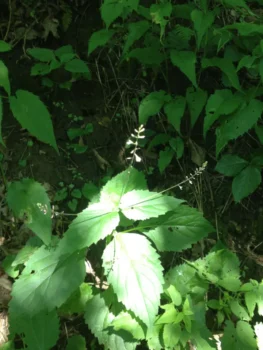
American Lopseed: A Charming Native Shade Plant for Woodland Gardens
If you’re looking for a delicate, low-maintenance native plant that thrives in shady spots, American lopseed (Phryma leptostachya) might just be the perfect addition to your garden. This charming perennial forb offers graceful beauty and ecological benefits while asking for very little in return.
What Makes American Lopseed Special?
American lopseed gets its quirky name from its distinctive hooked fruits that literally hang lopsided from the flower spikes. But don’t let the unusual name fool you – this native beauty produces delicate sprays of small white to pale pink tubular flowers that arch gracefully in slender, one-sided spikes. The flowers appear from mid to late summer, creating an ethereal, woodland fairy-tale effect that’s hard to resist.
As a perennial forb (a non-woody herbaceous plant), American lopseed typically reaches 1-3 feet in height and spreads slowly through underground rhizomes, making it an excellent groundcover for naturalized areas.
Where American Lopseed Calls Home
This native gem has an impressive range across North America. You’ll find American lopseed naturally growing throughout most of the eastern United States, from Maine down to Florida and extending west into the Great Plains. It’s also native to several Canadian provinces including Manitoba, Ontario, Quebec, and New Brunswick. In fact, it grows in over 40 U.S. states, making it one of our more widely distributed native species.
- Species observed
- No observations
Perfect Spots in Your Garden
American lopseed shines in woodland gardens and shaded landscapes where many other plants struggle. Here’s where it works best:
- Woodland gardens and forest edges
- Shade gardens under mature trees
- Native plant communities
- Naturalized areas and wildlife habitats
- Rain gardens (it can handle occasional wet conditions)
Its understated beauty makes it an excellent companion plant that won’t compete with showier specimens but will provide textural interest and fill in gaps with its spreading habit.
Growing Conditions and Care
One of American lopseed’s best qualities is how easy-going it is about growing conditions. This adaptable native thrives in USDA hardiness zones 3-8, making it suitable for most temperate regions.
Light requirements: Partial to full shade (though it can tolerate some morning sun)
Soil preferences: Moist but well-drained soil, though it adapts to various soil types and moisture levels
Wetland status: Interestingly, American lopseed has different wetland preferences depending on the region. In most areas, it’s classified as facultative upland, meaning it usually prefers non-wetland conditions but can handle some moisture. In the Midwest, it’s considered obligate upland and almost never occurs in wetlands.
Planting and Care Tips
American lopseed is wonderfully low-maintenance once established:
- Plant in spring or fall when temperatures are moderate
- Space plants 12-18 inches apart if planting multiple specimens
- Water regularly the first season to help establish the root system
- Once established, it’s quite drought tolerant in shaded conditions
- Cut back in late fall or early spring to tidy up the garden
- Allow it to self-seed if you want it to naturalize
- Divide clumps every few years if you want to control spread or create new plants
Benefits for Wildlife and Pollinators
While American lopseed may look delicate, it’s a hardworking member of the native plant community. The small tubular flowers attract various pollinators, including native bees and beneficial insects. The plant also provides habitat and food sources for native wildlife, contributing to the overall health of your local ecosystem.
Should You Plant American Lopseed?
If you have shaded areas in your garden and want to support native wildlife while enjoying a low-maintenance, graceful plant, American lopseed is definitely worth considering. It’s particularly valuable for gardeners looking to create authentic woodland plant communities or for those who appreciate subtle, naturalistic beauty over flashy displays.
However, keep in mind that this isn’t a plant for formal gardens or sunny borders. Its quiet charm and spreading habit make it best suited for informal, naturalized settings where it can weave through other woodland plants and create the kind of serene, forest-floor atmosphere that makes you want to slow down and appreciate nature’s gentler side.
American lopseed proves that sometimes the most rewarding garden plants are the ones that ask for the least while giving back the most – to both gardeners and the wildlife that call our gardens home.