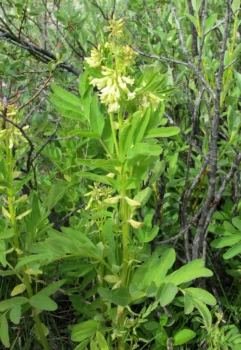
American Milkvetch: A Hardy Native Perennial for Northern Gardens
If you’re looking for a tough-as-nails native perennial that can handle whatever Mother Nature throws at it, American milkvetch might just be your new best friend. This unassuming member of the legume family packs a serious punch when it comes to adaptability and ecological benefits.
What is American Milkvetch?
American milkvetch (Astragalus americanus) is a perennial wildflower that’s been quietly thriving across northern North America for thousands of years. Don’t let its humble appearance fool you – this little powerhouse is one of nature’s most reliable performers, especially if you live in a challenging climate.
Where Does It Call Home?
This hardy native has quite the impressive range, naturally occurring across Alaska, much of Canada (including Alberta, British Columbia, Manitoba, Ontario, Quebec, Saskatchewan, Yukon, and Northwest Territories), and several northern U.S. states including Colorado, Montana, South Dakota, and Wyoming. It’s truly a plant of the northern frontier!
- Species observed
- No observations
Why Your Garden (and Local Wildlife) Will Love It
American milkvetch brings several compelling benefits to the table:
- Pollinator magnet: Its clusters of purple to blue flowers are irresistible to bees and other beneficial insects
- Soil improvement: As a legume, it fixes nitrogen in the soil, naturally fertilizing surrounding plants
- Extreme hardiness: Thrives in USDA zones 2-6, making it perfect for cold-climate gardeners
- Low maintenance: Once established, it practically takes care of itself
- Versatile growing conditions: Happy in both wetlands and dry areas thanks to its facultative wetland status
What It Looks Like
American milkvetch is a modest beauty, typically forming low-growing clumps with compound leaves made up of small leaflets. In summer, it sends up racemes of small, pea-like flowers in shades of purple to blue. While it won’t win any showiest flower contests, its quiet charm and reliable performance more than make up for its understated appearance.
Perfect Garden Roles
This adaptable native shines in several garden settings:
- Prairie and wildflower gardens: Adds authentic native character
- Naturalized areas: Perfect for low-maintenance landscapes
- Ground cover: Fills in spaces with its spreading habit
- Rain gardens: Tolerates both wet and dry conditions
- Restoration projects: Excellent for rehabilitating native ecosystems
Growing American Milkvetch Successfully
The good news? American milkvetch is refreshingly easy to grow once you understand its preferences:
Light: Full sun to partial shade – it’s quite flexible
Soil: Well-drained soils are preferred, but it tolerates a wide range of conditions, including poor soils that would challenge other plants
Water: Drought tolerant once established, but also handles periods of moisture
Planting: Direct seeding works well, as many legumes prefer not to have their roots disturbed. Plant seeds in fall for spring germination
Care and Maintenance
Here’s where American milkvetch really wins you over – it needs almost no babying once it’s settled in. Minimal watering after establishment, no fertilizing needed (remember, it makes its own nitrogen!), and very few pest or disease issues. It’s the kind of plant that makes you look like a gardening genius without breaking a sweat.
Is American Milkvetch Right for Your Garden?
American milkvetch is an excellent choice if you:
- Live in zones 2-6 and want reliable native plants
- Appreciate low-maintenance gardening
- Want to support pollinators and local ecosystems
- Need plants for challenging sites or restoration projects
- Love the idea of growing something truly native to North America
While it might not be the flashiest plant in your garden, American milkvetch offers something perhaps more valuable – the satisfaction of growing a genuinely useful, ecologically important native that connects your landscape to the broader natural world. Sometimes the best garden citizens are the ones that quietly do their job while asking for very little in return.