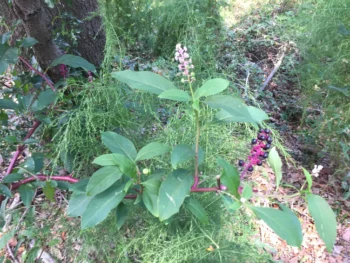
American Pokeweed Rigid Variety: A Southeastern Native Worth Knowing
If you’re exploring native plants for your southeastern garden, you might have stumbled across Phytolacca americana var. rigida, commonly known as American pokeweed. This particular variety of the well-known pokeweed represents a more rigid form of the species, offering gardeners in the Southeast a chance to grow a truly regional native plant.
What Makes This Pokeweed Special?
Phytolacca americana var. rigida is a perennial forb, which means it’s an herbaceous plant that comes back year after year without developing woody stems. As the name suggests, this variety is distinguished by its more rigid growth habit compared to the typical American pokeweed. It’s also known by the botanical synonym Phytolacca rigida Small, named after the botanist John Kunkel Small who studied southeastern flora extensively.
Where You’ll Find It Growing Wild
This native variety has a distinctly southeastern distribution, naturally occurring across nine states: Alabama, Florida, Georgia, Louisiana, Mississippi, North Carolina, South Carolina, Texas, and Virginia. This regional specialization makes it particularly valuable for gardeners looking to support their local ecosystems with plants that truly belong in their area.
- Species observed
- No observations
Should You Plant It in Your Garden?
Here’s where things get interesting – and a bit challenging. While Phytolacca americana var. rigida is undoubtedly a legitimate native plant for the Southeast, finding specific growing information for this particular variety can be tricky. Most nurseries and gardening resources focus on the species as a whole rather than this specific rigid variety.
The Reality Check
Before you get too excited about adding this plant to your native garden, here are some important considerations:
- Limited availability: This specific variety is not commonly found in nurseries
- Identification challenges: Distinguishing this variety from the typical species requires botanical expertise
- Growing information: Specific care requirements for this variety are not well-documented in popular gardening resources
What We Know About Growing Conditions
While specific information about var. rigida is limited, we can infer from its natural distribution that it likely prefers the growing conditions typical of the southeastern United States. However, without more detailed research, it’s difficult to provide specific guidance on soil preferences, moisture requirements, or ideal planting locations.
A Word of Caution
It’s worth noting that all parts of pokeweed plants contain compounds that can be toxic if ingested. If you’re considering any pokeweed variety for your garden, keep this in mind, especially if you have children or pets.
The Bottom Line
Phytolacca americana var. rigida represents an interesting piece of southeastern botanical heritage. While it’s certainly a legitimate native plant, the practical challenges of sourcing, identifying, and growing this specific variety might make it more of interest to botanical enthusiasts than everyday gardeners.
If you’re passionate about supporting southeastern native plants, you might consider focusing on other well-documented regional natives that are more readily available and easier to grow successfully. However, if you’re a plant collector with access to botanical networks or specialized native plant societies, this variety could be a fascinating addition to a specialized native plant collection.
Moving Forward
If you’re determined to grow this particular variety, your best bet is to connect with native plant societies in the southeastern states where it naturally occurs. They may have members who can help with identification and potentially provide seeds or plants from ethical, wild-collected sources.
Remember, when it comes to native plants, sometimes the most common natives in your area are common for good reason – they’re well-adapted, beneficial to local wildlife, and easier to grow successfully in home gardens.