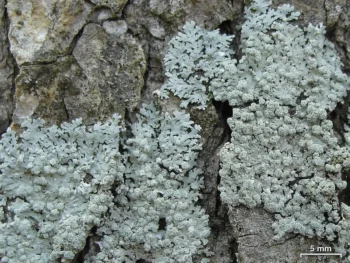
American Rosette Lichen: A Fascinating Natural Garden Visitor
Have you ever noticed small, leafy-looking growths on tree bark, rocks, or fences in your garden and wondered what they might be? You might be looking at the American rosette lichen, scientifically known as Physcia americana. While not a plant in the traditional sense, this fascinating organism can add unexpected natural beauty to your outdoor spaces.
What Exactly Is American Rosette Lichen?
Despite its common name suggesting it’s American, lichens like Physcia americana are actually incredible partnerships between fungi and algae (or sometimes cyanobacteria). Think of it as nature’s ultimate roommate situation – the fungus provides structure and protection, while the algae produces food through photosynthesis. This teamwork creates the unique organism we see growing in our gardens.
The American rosette lichen is native to North America, making it a natural part of our continent’s ecosystem. You might also see it referenced by its synonym, Physcia tribacoides, in older botanical texts.
Geographic Distribution
While specific distribution details for Physcia americana are not well-documented in popular sources, as a North American native, it can potentially be found across various regions of the continent where suitable growing conditions exist.
Is It Beneficial in Your Garden?
Absolutely! American rosette lichen and other lichens are fantastic indicators of air quality – they’re like nature’s pollution detectors. If you spot them in your garden, it’s actually a good sign that your local air quality is relatively clean. Lichens are extremely sensitive to air pollutants, so their presence suggests a healthy environment.
Here’s why you might want to welcome American rosette lichen in your garden:
- They don’t harm trees or structures they grow on – they’re just using them as a place to live
- They contribute to biodiversity in your garden ecosystem
- They can add subtle texture and interest to bare bark or rocks
- They serve as indicators of good air quality
- They require absolutely no maintenance from you
How to Identify American Rosette Lichen
Identifying American rosette lichen can be tricky without specialized knowledge, as many lichen species look similar to the untrained eye. However, here are some general characteristics to look for:
- Leafy or rosette-like appearance (hence the rosette in its common name)
- Typically grows on tree bark, rocks, or other hard surfaces
- Grayish to greenish coloration
- Flat, spreading growth pattern
- Small size, usually just a few centimeters across
For definitive identification, you’d need to consult lichen identification guides or contact local naturalists, as lichen identification often requires microscopic examination of specific features.
Living Alongside Lichens
The wonderful thing about American rosette lichen is that it requires no care from you whatsoever. In fact, the best thing you can do for lichens in your garden is to leave them alone. They don’t need watering, fertilizing, or any other maintenance.
If you want to encourage lichen diversity in your garden:
- Avoid using chemical pesticides or fungicides, which can harm these sensitive organisms
- Leave some natural surfaces like tree bark and rocks undisturbed
- Maintain good air quality around your property
- Be patient – lichens grow very slowly
A Quiet Garden Companion
American rosette lichen represents one of nature’s most successful partnerships, quietly going about its business in your garden while serving as a living testament to clean air and a healthy ecosystem. While you can’t exactly plant lichens like traditional garden plants, recognizing and appreciating them adds another layer of wonder to your outdoor space.
Next time you’re wandering through your garden, take a moment to look closely at the surfaces around you. You might just spot this remarkable organism doing its part to make your garden a more diverse and interesting place.