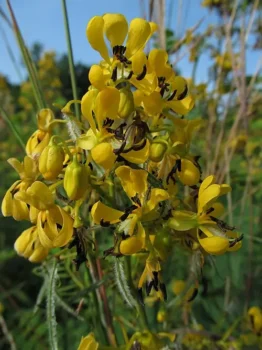
American Senna: A Bright Native Beauty for Your Garden
Looking for a cheerful native plant that’ll make both you and the local pollinators happy? Meet American senna (Senna hebecarpa), a delightful perennial that’s been quietly beautifying eastern North American landscapes long before any of us were around to appreciate it.
What Makes American Senna Special?
This native gem is what botanists call a forb – basically a non-woody perennial that dies back to the ground each winter and pops back up come spring. Don’t let the technical term fool you though; American senna is as reliable as your morning coffee and twice as sunny with its bright yellow blooms.
You might also see this plant listed under its former scientific names, including Cassia hebecarpa, but don’t worry – it’s the same wonderful plant regardless of what the botanists decide to call it this decade!
Where American Senna Calls Home
American senna is a true native of eastern North America, naturally growing from Ontario down through the eastern United States. You’ll find it thriving in Connecticut, Delaware, Georgia, Illinois, Indiana, Kentucky, Maine, Maryland, Massachusetts, Michigan, New Hampshire, New Jersey, New York, North Carolina, Ohio, Pennsylvania, Rhode Island, South Carolina, Tennessee, Vermont, Virginia, West Virginia, and Wisconsin – plus the District of Columbia for good measure.
- Species observed
- No observations
The Perfect Spot for Your American Senna
Here’s where American senna gets interesting from a gardening perspective. This adaptable native has different preferences depending on where you live:
- In coastal areas, it’s happy in both wet and dry spots
- In mountainous and piedmont regions, it’s equally flexible
- In the Midwest and Northeast, it leans toward wetter conditions but won’t turn its nose up at drier soil
This flexibility makes American senna perfect for those tricky spots in your garden where you’re not quite sure what will thrive.
Growing American Senna Successfully
The beauty of American senna lies in its easy-going nature. Hardy in USDA zones 4-8, this perennial adapts to a wide range of conditions:
- Sunlight: Full sun to partial shade
- Soil: Moist to wet soils preferred, but tolerates various soil types
- Maintenance: Refreshingly low – just cut it back in late fall or early spring
- Spreading: Self-seeds readily, so you might find pleasant surprises popping up around your garden
Why Your Garden (and Local Wildlife) Will Love It
American senna isn’t just a pretty face – though those cheerful yellow flowers that appear in summer are certainly eye-catching. This native plant is a pollinator magnet, attracting bees, butterflies, and other beneficial insects that help keep your garden ecosystem humming along nicely.
The bright yellow blooms appear in clusters during the summer months, creating a sunny display that pairs beautifully with other native plants. The compound leaves add nice texture to the garden even when the plant isn’t in bloom.
Where American Senna Shines in Your Landscape
American senna is wonderfully versatile in the garden. Consider it for:
- Native plant gardens where you want authentic regional character
- Pollinator gardens that need reliable summer bloomers
- Rain gardens or areas with occasional standing water
- Naturalized landscapes where you want a wild but maintained look
- Wetland edges or pond margins
The Bottom Line
American senna offers that perfect combination of native authenticity, pollinator support, and gardener-friendly growing habits. It’s not fussy about conditions, doesn’t require constant attention, and rewards you with cheerful yellow flowers and the satisfaction of supporting local ecosystems.
If you’re looking to add some native charm to your garden while supporting pollinators and embracing low-maintenance gardening, American senna deserves a spot on your planting list. Just be prepared for it to self-seed – though honestly, having more of this sunny native around is hardly a problem worth worrying about!