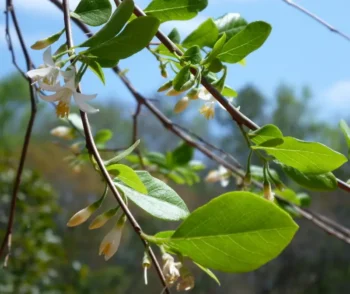
American Snowbell: A Native Gem for Wet Gardens
If you’re looking for a charming native shrub that thrives in those tricky wet spots where other plants struggle, meet the American snowbell (Styrax americanus). This delightful native offers delicate spring blooms, lovely fall color, and the satisfaction of supporting local ecosystems—all while being surprisingly easy to grow once you understand its preferences.
What Makes American Snowbell Special?
American snowbell is a perennial shrub that typically grows 6-10 feet tall and wide, though it can reach up to 15 feet under ideal conditions. Don’t let the name fool you—this isn’t related to the European snowdrop flower. Instead, it gets its common name from the clusters of small, white, bell-shaped flowers that dangle gracefully from its branches each spring.
The plant showcases fine-textured green foliage throughout the growing season, then puts on a lovely show of yellow fall color before dropping its leaves. Its smooth, gray bark adds subtle winter interest, making it a four-season performer in the landscape.
Where American Snowbell Calls Home
This native beauty has quite an impressive range across the United States, growing naturally in Alabama, Arkansas, Florida, Georgia, Illinois, Indiana, Kentucky, Louisiana, Mississippi, Missouri, North Carolina, Ohio, Oklahoma, South Carolina, Tennessee, Texas, Virginia, and the District of Columbia. It’s truly a plant of the American Southeast and south-central regions.
- Species observed
- No observations
The Perfect Spot in Your Garden
American snowbell shines as an understory shrub in woodland gardens and naturalized areas. Its love of moisture makes it perfect for:
- Rain gardens and bioswales
- Pond or stream edges
- Low-lying areas that stay moist
- Woodland gardens with dappled light
- Native plant landscapes
- Wetland restoration projects
The shrub works beautifully as a specimen plant where you want to highlight a wet area, or it can be massed for a more naturalized look. Its intermediate shade tolerance means it’s happy in partial shade to full sun, making it quite versatile for different garden situations.
A Friend to Pollinators and Wildlife
Those charming spring flowers aren’t just pretty—they’re pollinator magnets. Bees, butterflies, and other beneficial insects flock to the blooms, making American snowbell a valuable addition to any pollinator-friendly garden. As a native plant, it supports local ecosystems in ways that non-native alternatives simply can’t match.
Growing Conditions: Wet is Best
Here’s where American snowbell gets specific about its needs—it loves water. This shrub is classified as an obligate wetland plant in most regions, meaning it almost always occurs in wetlands in nature. In some coastal areas, it’s facultative wetland, meaning it usually prefers wet conditions but can occasionally tolerate drier spots.
Key growing requirements include:
- Moisture: Consistently moist to wet soil; can handle seasonal flooding
- Soil type: Adapts to coarse and medium-textured soils but struggles in heavy clay
- pH: Prefers acidic conditions (pH 4.5-8.5, with the lower end being ideal)
- Light: Intermediate shade tolerance; happy in partial shade to full sun
- Hardiness: USDA zones 5-9, tolerating temperatures down to about -16°F
- Drought tolerance: Low—don’t expect this one to survive dry spells
Planting and Care Tips
American snowbell is refreshingly low-maintenance once established in the right conditions:
Planting: Choose a spot with reliable moisture—think rain garden, pond edge, or naturally wet depression. Amend the soil with organic matter to improve drainage while retaining moisture. Spring or early fall are ideal planting times.
Watering: If you don’t have a naturally wet site, you’ll need to provide consistent irrigation. This plant doesn’t do drought-tolerant.
Mulching: A 2-3 inch layer of organic mulch helps retain soil moisture and suppress weeds.
Pruning: Minimal pruning needed. Remove dead, damaged, or crossing branches in late winter if desired.
Propagation: Best propagated by cuttings rather than seed, making it a great plant to share with fellow gardeners.
Is American Snowbell Right for Your Garden?
American snowbell is an excellent choice if you have consistently moist conditions and want to support native wildlife. Its delicate flowers, attractive fall color, and ecological benefits make it a winner for the right location. However, it’s not the shrub for dry gardens, formal landscapes, or areas where you can’t provide adequate moisture.
Consider planting American snowbell if you:
- Have wet or consistently moist garden areas
- Want to create habitat for native pollinators
- Enjoy delicate, naturalistic garden styles
- Are developing a rain garden or wetland area
- Appreciate native plants with regional significance
This charming native shrub proves that wet garden challenges can become opportunities for growing something truly special. With its graceful flowers, ecological benefits, and adaptability to moisture-loving conditions, American snowbell deserves consideration for any garden blessed with abundant water.