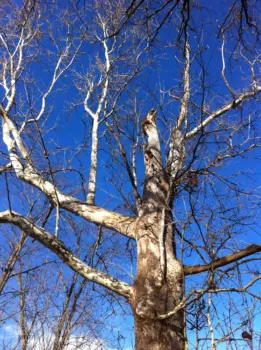
American Sycamore: The Majestic Native Giant That Commands Attention
If you’ve ever wondered what tree could make your yard look like a scene from a nature documentary, meet the American sycamore (Platanus occidentalis). This native beauty is like the gentle giant of the tree world – massive, eye-catching, and surprisingly approachable once you get to know it.
What Makes American Sycamore Special?
The American sycamore isn’t just another tree; it’s a living piece of North American history. This perennial powerhouse has been gracing our continent’s landscapes long before European settlers arrived, and it’s still going strong today. What really sets it apart is that show-stopping bark that looks like someone took a paint brush and created abstract art on the trunk – patches of cream, gray, and brown that peel away to reveal fresh layers underneath.
Also known simply as sycamore, this tree is native to both Canada and the lower 48 states, making it a true North American original. You’ll find it naturally growing across a huge swath of the eastern United States, from Maine down to Florida and as far west as Nebraska and Texas.
- Species observed
- No observations
Should You Plant an American Sycamore?
Here’s the thing about American sycamores – they’re absolutely fantastic trees, but they’re not for everyone. Let’s be real: this tree thinks big. We’re talking about a specimen that can reach 100 feet tall at maturity and can hit 65 feet in just 20 years thanks to its rapid growth rate. If you’ve got a postage stamp-sized yard, this probably isn’t your tree.
But if you have the space? Oh boy, do you have options! American sycamores are perfect for:
- Large residential properties where you want a statement shade tree
- Parks and public spaces
- Naturalistic garden designs
- Rain gardens and areas with occasional flooding
- Riparian restoration projects
The Ecological Superstar
One of the best reasons to plant an American sycamore is what it does for local wildlife. While the small, inconspicuous red flowers might not win any beauty contests, they provide valuable early-season pollen for various insects. The tree’s dense summer foliage offers excellent nesting sites and shelter, while its brown, conspicuous seed balls provide food for birds through fall and winter.
Speaking of water, American sycamores have an interesting relationship with moisture. Depending on where you live, this tree falls into different wetland categories – from facultative (can handle wet or dry) in some regions to facultative wetland (prefers wet but tolerates dry) in others. This makes it incredibly valuable for rain gardens and areas that experience seasonal flooding.
Growing Conditions: What Your Sycamore Needs
American sycamores are surprisingly adaptable, which is part of what makes them such successful native plants. Here’s what they prefer:
- Hardiness: Thrives in USDA zones 4-9, handling temperatures as low as -34°F
- Soil: Loves coarse and medium-textured soils but struggles with fine, clay-heavy soils
- pH: Prefers slightly acidic conditions between 4.9 and 6.5
- Water: High moisture needs – this tree is thirsty!
- Sun: Full sun to intermediate shade tolerance
- Space: Needs at least 30 inches of root depth and plenty of room to spread
One heads up: American sycamores have low drought tolerance, so if you live in an arid area or experience regular dry spells, you’ll need to keep up with watering, especially during the tree’s establishment years.
Planting and Care Tips
The good news is that American sycamores are generally easy-going once you meet their basic needs. Here’s how to set yours up for success:
Planting: American sycamores are routinely available from nurseries and can be planted from containers, bare root, or grown from seed or cuttings. Plant in spring after the last frost, giving your tree plenty of space – think about where it’ll be in 20 years, not just today.
Watering: Keep young trees consistently moist but not waterlogged. Mature trees are more tolerant of both wet and dry periods, but they’ll always prefer consistent moisture.
Maintenance: These trees have excellent resprout ability and can handle moderate pruning, but their natural single-stem growth form usually looks best with minimal intervention. Remove dead or damaged branches as needed.
Fertilization: Medium fertility requirements mean you won’t need to pamper your sycamore with constant feeding – average garden soil amended with compost should do the trick.
The Bottom Line
American sycamore is one of those trees that makes you feel like you’re doing something right for the planet. It’s native, it’s beautiful in its own distinctive way, and it provides genuine ecological value. The trade-off is space – lots of it. If you have room for a tree that will outlive you and probably your grandchildren (they have long lifespans), and you want to create habitat while getting amazing shade, American sycamore could be your perfect match.
Just remember: this tree doesn’t do small. But sometimes, bigger really is better.