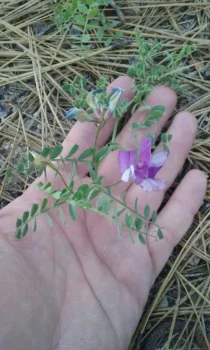
American Vetch: A Native Climber That’s Both Beautiful and Beneficial
If you’re looking for a native plant that works double duty in your garden, American vetch (Vicia americana americana) might just be your new best friend. This charming perennial vine brings lovely purple flowers to your landscape while quietly improving your soil and supporting local wildlife. Let’s dive into why this unassuming native deserves a spot in your garden.
What Exactly is American Vetch?
American vetch is a perennial forb that behaves more like a gentle climbing vine than your typical herb. Don’t let the scientific classification fool you – this plant has personality! It’s a true North American native that has been quietly doing its thing across the continent long before any of us started thinking about native gardening.
As a member of the legume family, American vetch has a secret superpower: it can actually improve your soil by fixing nitrogen from the air. Think of it as nature’s fertilizer factory, working behind the scenes to benefit your entire garden.
Where Does American Vetch Call Home?
This adaptable native has one of the most impressive ranges you’ll find in North American plants. American vetch grows naturally from Alaska down through Canada and across most of the lower 48 states, including Alberta, British Columbia, Alaska, Manitoba, Arizona, California, Ontario, Colorado, Quebec, Saskatchewan, and many others. It’s truly a continental traveler!
- Species observed
- No observations
Important note for New Jersey gardeners: American vetch is listed as endangered in New Jersey with a rarity status of S1. If you’re in the Garden State and want to grow this beauty, make sure you source your seeds or plants from reputable native plant suppliers who can guarantee responsible collection practices.
Why Your Garden Will Love American Vetch
American vetch brings several wonderful qualities to your landscape:
- Beautiful flowers: Clusters of purple to blue-violet blooms appear throughout the growing season, adding color and charm
- Pollinator magnet: Bees, butterflies, and other beneficial insects flock to the nectar-rich flowers
- Soil improvement: As a nitrogen-fixing legume, it naturally enriches the soil for neighboring plants
- Erosion control: Its climbing and trailing habit makes it excellent for stabilizing slopes
- Low maintenance: Once established, it’s quite drought tolerant and largely takes care of itself
Perfect Spots for American Vetch
This versatile native works beautifully in several garden settings:
- Wildflower gardens and prairie restorations
- Naturalized areas where it can ramble freely
- Slopes that need erosion control
- Edges of woodlands or transition zones
- Native plant gardens focused on supporting local wildlife
Growing American Vetch Successfully
The good news is that American vetch is refreshingly easy to grow, especially once you understand its preferences:
Climate and Hardiness: This tough native thrives in USDA hardiness zones 3-9, making it suitable for most of North America.
Light Requirements: American vetch is quite flexible, growing well in full sun to partial shade. It tends to flower most prolifically with at least 6 hours of sunlight daily.
Soil Preferences: Like many natives, it’s not particularly fussy about soil. It adapts to various soil types and, thanks to its nitrogen-fixing ability, can even thrive in relatively poor soils.
Water Needs: While American vetch appreciates consistent moisture during establishment, it becomes quite drought tolerant once its roots are well-established.
Planting and Care Tips
Getting American vetch started in your garden is straightforward:
- Plant seeds in fall or early spring when soil temperatures are cool
- Scarify seeds lightly or soak overnight to improve germination
- Sow seeds about ¼ inch deep in prepared soil
- Keep soil consistently moist until seedlings are established
- Provide support structures if you want it to climb, or let it trail as ground cover
- Minimal fertilization needed – remember, it makes its own nitrogen!
Things to Keep in Mind
American vetch is a well-behaved native that won’t take over your garden aggressively. It can self-seed, which is generally a good thing in naturalized areas, but you can always remove unwanted seedlings if needed.
Because of its endangered status in New Jersey, gardeners there should be especially mindful about sourcing plants responsibly and consider this an opportunity to help support a rare native species.
The Bottom Line
American vetch represents the best of what native plants can offer: beauty, ecological function, and easy care all wrapped up in one charming package. Whether you’re creating a pollinator garden, restoring a natural area, or simply want a lovely climbing plant that supports local wildlife, American vetch delivers on all fronts.
Plus, there’s something deeply satisfying about growing a plant that has been thriving across North America for thousands of years. You’re not just adding to your garden – you’re connecting with the natural heritage of your region.