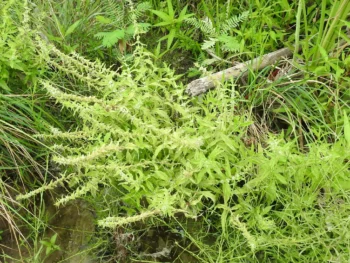
American Water Horehound: A Wetland Wonder for Your Native Garden
Meet American water horehound (Lycopus americanus), a humble yet hardworking native perennial that’s perfect for gardeners looking to create authentic wetland habitats. While it may not win any beauty contests with its modest white flowers, this unassuming plant packs a powerful ecological punch and could be exactly what your rain garden or pond edge needs.
What Makes American Water Horehound Special?
American water horehound is a true North American native, naturally occurring throughout Canada and all of the lower 48 states. This impressive range spans from Alberta to Florida and from California to Maine, making it one of our continent’s most widely distributed wetland plants. You’ll find it thriving in diverse regions including the Great Plains, Eastern Mountains, Atlantic Coastal Plain, and Western Mountains.
- Species observed
- No observations
As a perennial forb (that’s botanist-speak for a non-woody flowering plant), American water horehound grows as a single crown and reaches about 1.8 feet tall at maturity. Its moderate growth rate and erect form make it a reliable addition to naturalized plantings.
Why Grow American Water Horehound?
This plant is an obligate wetland species, meaning it almost always occurs in wetlands across all regions of North America. Here’s why that matters for your garden:
- Perfect for rain gardens and bioswales where other plants might struggle
- Helps manage stormwater naturally while supporting local ecosystems
- Provides habitat and food sources for native wildlife
- Attracts small native bees and beneficial insects with its summer blooms
- Requires minimal maintenance once established
Important note: In New Jersey, a variety of American water horehound (Long’s American water horehound) has a rarity status of S2S3, meaning it’s uncommon in the state. If you’re gardening in areas where rare varieties occur, always source plants responsibly from reputable native plant nurseries.
Garden Design and Landscape Uses
American water horehound shines in specific garden situations where its water-loving nature becomes an asset rather than a challenge:
- Rain gardens: Plant along edges or in shallow depressions
- Pond and stream margins: Creates natural-looking transitions
- Bioswales: Helps filter runoff while looking intentional
- Naturalized wetland gardens: Pairs beautifully with other native moisture-lovers
- Shaded wet areas: Tolerates shade where many wetland plants struggle
Growing Conditions and Care
The secret to success with American water horehound is understanding its love affair with water. This plant has high moisture requirements and won’t tolerate drought, making it unsuitable for typical garden beds but perfect for problem wet spots.
Ideal Growing Conditions:
- Soil: Adaptable to fine and medium-textured soils, not suitable for coarse/sandy soils
- Moisture: High water needs – thrives in consistently moist to wet conditions
- pH: Tolerates a range from 5.2 to 7.8 (slightly acidic to slightly alkaline)
- Light: Shade tolerant, making it valuable for woodland wetlands
- Temperature: Hardy to -38°F, suitable for USDA zones 3-9
Planting and Maintenance:
- Best planted from seed in early summer when blooming begins
- Can also be propagated by tubers for quicker establishment
- Space plants according to your design goals (2,700-10,000 plants per acre for mass plantings)
- Once established, requires minimal care beyond ensuring adequate moisture
- Has high anaerobic tolerance, so won’t mind occasionally waterlogged conditions
What to Expect
American water horehound produces small, inconspicuous white flowers in early summer, followed by brown seeds that persist through fall. Don’t expect a showy display – this plant’s beauty lies in its ecological function rather than ornamental appeal. The green foliage has a coarse texture and moderate porosity in summer, becoming more porous in winter after the leaves drop.
With a long lifespan and moderate vegetative spread, established plants will reliably return each year, slowly expanding to fill appropriate spaces without becoming aggressive.
The Bottom Line
American water horehound isn’t for every garden, but for the right situation, it’s invaluable. If you have a wet, challenging spot where other plants fail, or if you’re creating habitat for native wildlife, this humble native deserves serious consideration. Just remember to source responsibly, especially in areas where rare varieties might occur, and embrace its understated charm as part of a larger ecological picture.
Sometimes the best garden plants are the ones that work quietly behind the scenes, and American water horehound is definitely one of those unsung heroes of the native plant world.