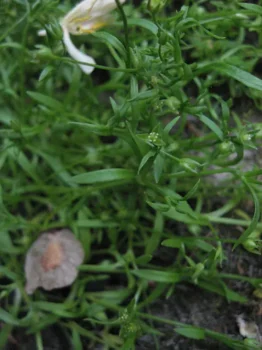
American Water Starwort: A Rare Native Gem for Your Water Garden
If you’re passionate about native plants and have a spot that stays consistently moist in your garden, you might want to learn about American water starwort (Stellaria fontinalis). This delicate perennial is one of those special native plants that most gardeners have never heard of – and for good reason. It’s quite rare and found in only a handful of locations across the southeastern United States.
What Makes American Water Starwort Special?
American water starwort is a charming little forb – that’s gardener-speak for a soft-stemmed flowering plant that doesn’t develop woody tissue like shrubs or trees. As a perennial, it comes back year after year, forming low mats of delicate foliage topped with tiny white star-shaped flowers that give the plant its common name.
This native beauty belongs to the chickweed family and has quite the collection of botanical aliases, including Alsine fontinalis and Sagina fontinalis, among others. But don’t let all those scientific names intimidate you – what matters is that this little plant is a true American original.
Where Does It Call Home?
American water starwort has a very limited natural range, currently found only in Kentucky and Tennessee. This southeastern native has adapted to life in consistently moist environments, which explains why it’s not commonly encountered in typical garden settings.
- Species observed
- No observations
A Word of Caution: Rarity Matters
Before we dive into growing tips, there’s something important you need to know. American water starwort is considered globally vulnerable, with a conservation status that puts it at risk. In Alabama, it’s even rarer, classified as critically imperiled. This means if you’re lucky enough to find this plant available, you should only obtain it from reputable native plant nurseries that propagate their own stock – never collect it from the wild.
Growing American Water Starwort Successfully
If you can source this rare gem responsibly, here’s what you need to know to grow it successfully:
Ideal Growing Conditions
- Moisture: Consistently moist to wet soil is essential – think bog garden or streamside conditions
- Light: Partial shade works best, protecting it from harsh afternoon sun
- Soil: Adaptable to various soil types as long as they stay moist
- Climate: Hardy in USDA zones 5-8, matching its native southeastern range
Perfect Garden Spots
American water starwort isn’t your typical border plant. Instead, consider these specialized locations:
- Rain gardens where water naturally collects
- Alongside streams or water features
- Bog gardens or consistently moist woodland areas
- Native plant gardens focused on rare species conservation
Wildlife and Pollinator Benefits
While this plant’s tiny white flowers might seem insignificant, they serve an important ecological role. Small pollinators like tiny flies and beetles visit the blooms, and the plant provides habitat for various small creatures that depend on moist environments. By growing rare natives like American water starwort, you’re creating refugia for specialized wildlife that might otherwise have nowhere to go.
Care and Maintenance
The good news is that once established in the right conditions, American water starwort is relatively low-maintenance. The key is never letting it dry out completely. In natural settings, it grows in areas that receive consistent moisture year-round, so supplemental watering during dry spells is crucial.
Since it’s a low-growing mat-former, it won’t compete well with aggressive weeds, so gentle weeding around young plants helps them establish. Beyond that, this little native is content to do its own thing.
Should You Grow American Water Starwort?
This plant isn’t for everyone, and that’s okay. If you have the right growing conditions – consistently moist soil and a passion for rare native plants – American water starwort could be a meaningful addition to your conservation garden. However, only pursue it if you can source it responsibly from nurseries that propagate their own stock.
For most gardeners looking for moisture-loving natives, consider more readily available alternatives like cardinal flower, blue flag iris, or swamp milkweed. These provide similar habitat benefits without the conservation concerns.
But if you’re one of those gardeners who gets excited about growing rare plants and contributing to conservation efforts, American water starwort represents a unique opportunity to support a vulnerable species while adding something truly special to your water garden.