American Water-Willow: A Native Wetland Wonder for Your Garden
If you’ve been searching for a native plant that thrives in those perpetually soggy spots in your yard, meet your new best friend: American water-willow (Justicia americana). This charming perennial might just be the solution to your wetland gardening challenges, though it definitely has some strong opinions about where it wants to live!
What Makes American Water-Willow Special?
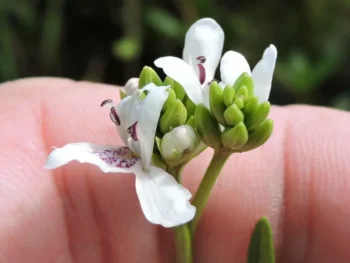
American water-willow is a native North American perennial that’s perfectly at home with wet feet. This delightful forb (that’s plant-speak for a non-woody flowering plant) produces clusters of small, tubular white flowers adorned with subtle purple markings that dance above narrow, willow-like foliage. Growing to about 2.5 feet tall, it creates beautiful naturalized colonies that look right at home along stream banks and pond edges.
Where Does It Call Home?
This wetland warrior is impressively widespread across North America. You’ll find American water-willow growing naturally from southern Canada down through most of the eastern and central United States, including Alabama, Arkansas, Ontario, Quebec, Delaware, District of Columbia, Florida, Georgia, Illinois, Indiana, Iowa, Kansas, Kentucky, Louisiana, Maryland, Michigan, Mississippi, Missouri, New Jersey, New York, North Carolina, Ohio, Oklahoma, Pennsylvania, South Carolina, Tennessee, Texas, Vermont, Virginia, West Virginia, and Wisconsin.
- Species observed
- No observations
Why Your Garden (and Local Wildlife) Will Love It
American water-willow isn’t just a pretty face – it’s a hardworking member of the garden community. Here’s why it deserves a spot in your landscape:
- Attracts butterflies, bees, and other pollinators with its nectar-rich blooms
- Provides excellent erosion control along water features
- Offers habitat and food sources for various wildlife species
- Blooms from late spring through summer, providing extended color
- Creates natural-looking colonies that require minimal maintenance
Perfect Garden Situations
American water-willow is quite particular about its living arrangements – and that’s actually a good thing! This plant is classified as Obligate Wetland across all regions, meaning it almost always occurs in wetlands. Here’s where it absolutely shines:
- Rain gardens and bioswales
- Pond and stream margins
- Bog gardens
- Wetland restoration projects
- Areas with seasonal flooding
- Naturalized water features
Growing Conditions: Keep It Wet!
The secret to success with American water-willow is simple: water, water, everywhere! This plant has very specific needs:
- Moisture: Consistently wet to saturated soils (drought tolerance is practically nonexistent)
- Hardiness: Thrives in USDA zones 3-9
- Soil: Adaptable to coarse, medium, or fine-textured soils as long as they stay moist
- pH: Tolerates a range from 5.4 to 7.6
- Light: Full sun to partial shade (quite shade tolerant)
- Space: Give it room to spread – it’s a rapid grower!
Planting and Care Tips
Ready to welcome this wetland beauty to your garden? Here’s how to get started:
- Timing: Plant in spring for best establishment
- Planting: American water-willow is routinely available and can be propagated by bare root
- Spacing: Plan for 3,450 to 10,912 plants per acre, depending on desired density
- Fertilization: Low fertility requirements – this plant isn’t picky about nutrients
- Maintenance: Minimal care needed once established; mainly just ensure consistent moisture
- Spreading: Be prepared for rapid vegetative spread – it can be quite enthusiastic about colonizing suitable areas!
A Word of Caution (The Good Kind)
While American water-willow is a well-behaved native, it does have one personality quirk: it spreads rapidly when happy. In the right conditions, it can form extensive colonies. This makes it fantastic for erosion control and naturalized areas, but you’ll want to consider this spreading habit when planning your garden layout.
The Bottom Line
American water-willow is a fantastic choice for gardeners dealing with consistently wet areas who want to embrace native plant gardening. It’s low-maintenance (once you meet its moisture needs), supports local ecosystems, and provides lovely seasonal interest with its delicate flowers and fine-textured foliage. Just make sure you’re ready for its enthusiastic spreading habits and have the wet conditions it craves. If you’ve got a soggy spot that needs some native love, American water-willow might just be your perfect match!