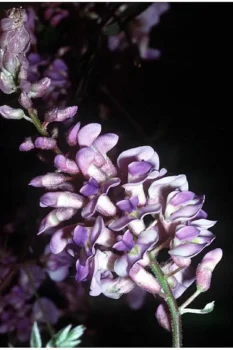
American Wisteria: The Native Alternative Your Garden Has Been Waiting For
If you’ve ever fallen in love with the romantic, cascading blooms of wisteria but hesitated due to concerns about invasive species, let me introduce you to your new garden hero: American wisteria (Wisteria frutescens). This gorgeous native climbing vine gives you all the dreamy wisteria vibes without the ecological guilt trip.
What Makes American Wisteria Special?
American wisteria is a perennial, twining climbing plant that can reach impressive heights of up to 50 feet when given proper support. Unlike its aggressive Asian cousins, this well-behaved native plays nicely with other plants and won’t take over your entire neighborhood.
This beauty is also known by several scientific names you might encounter, including Kraunhia frutescens and Wisteria macrostachya, but don’t let the botanical terminology intimidate you – it’s still the same wonderful plant.
Where Does American Wisteria Call Home?
This native gem naturally grows across a impressive swath of the United States, spanning 28 states from Florida up to Massachusetts and New York, and stretching west to Texas, Iowa, and Michigan. You’ll find it thriving in states including Alabama, Arkansas, Connecticut, Delaware, Georgia, Illinois, Indiana, Kentucky, Louisiana, Maryland, Mississippi, Missouri, North Carolina, Ohio, Oklahoma, Pennsylvania, South Carolina, Tennessee, Virginia, and West Virginia.
- Species observed
- No observations
The Visual Appeal: Why Your Eyes Will Thank You
American wisteria puts on quite the show with its purple, fragrant flower clusters that appear in late spring. The blooms are conspicuous and delightfully eye-catching, creating those Instagram-worthy moments we all crave. The medium-textured green foliage provides a lush backdrop during the growing season, though the plant does lose its leaves in winter (giving your garden a different kind of architectural interest).
With a rapid growth rate and multiple-stem growth form, this climbing beauty quickly transforms any vertical space into a living masterpiece. The brown seed pods that follow the flowers are less showy but add subtle textural interest.
Perfect Garden Roles and Landscape Uses
American wisteria is incredibly versatile in the landscape. Here’s where it really shines:
- Covering pergolas, arbors, and gazebos with romantic flair
- Screening unsightly views or structures
- Adding vertical interest to native plant gardens
- Naturalizing in woodland edges and rain gardens
- Creating living privacy screens along fences
This vine is particularly well-suited for naturalized landscapes, native plant gardens, and anywhere you want to support local wildlife while adding stunning visual appeal.
Growing Conditions: What American Wisteria Craves
The good news? American wisteria is relatively easy-going about its growing conditions. Here’s what it prefers:
- USDA Hardiness Zones: 5-9 (can handle temperatures down to -3°F)
- Soil: Adaptable to coarse, medium, and fine-textured soils with pH between 4.0-7.0
- Moisture: Medium moisture needs; usually found in wetland areas but can tolerate drier sites
- Sun exposure: Shade tolerant, but blooms best with adequate sunlight
- Drainage: Medium anaerobic tolerance, so it can handle some wet feet
One important note: this plant has low drought tolerance, so consistent moisture is key to keeping it happy, especially during establishment.
Planting and Care Tips for Success
Getting American wisteria established doesn’t require a master’s degree in horticulture, but a few key tips will set you up for success:
- Support structure: Install a sturdy support system before planting – this vine can get heavy!
- Spacing: Plant 692-1,746 plants per acre (or give each plant plenty of room in home landscapes)
- Establishment: Be patient – it may take a few years to really take off, but the high seedling vigor means it’ll be worth the wait
- Fertilizer: Medium fertility requirements mean occasional feeding will help, but it’s not a heavy feeder
- Pruning: Prune after flowering to maintain shape and size
- Winter care: The plant is deciduous, so don’t panic when it loses leaves – it’ll be back!
Wildlife and Pollinator Benefits
Here’s where American wisteria really earns its keep in the native plant world. Those gorgeous purple blooms aren’t just pretty faces – they’re pollinator magnets! Bees absolutely love the nectar-rich flowers, and you’ll likely spot butterflies and even hummingbirds visiting throughout the blooming period.
The plant also has medium nitrogen fixation capabilities, which means it’s actually improving your soil while it grows. Talk about a multitasker!
Propagation: Growing Your Own
American wisteria is routinely available commercially, so you shouldn’t have trouble finding it at native plant nurseries. It can be propagated by:
- Seeds (though they spread slowly)
- Bare root plants
- Container-grown specimens
The seeds are produced in medium abundance during summer, and while the plant has moderate vegetative spread, it won’t become problematic like invasive wisteria species.
The Bottom Line: Why Choose American Wisteria?
American wisteria gives you all the romance and beauty of traditional wisteria while supporting native ecosystems and local wildlife. It’s well-behaved, gorgeous, and perfectly adapted to a wide range of growing conditions across much of the United States.
Whether you’re looking to cover an ugly fence, create a living privacy screen, or add some vertical drama to your native plant garden, American wisteria delivers beauty with purpose. Your local pollinators will thank you, and you’ll get to enjoy those dreamy purple blooms knowing you’ve made an environmentally conscious choice.
So go ahead – let American wisteria climb its way into your heart and your garden. Just make sure you’ve got a sturdy support system ready, because this native beauty is ready to reach new heights!