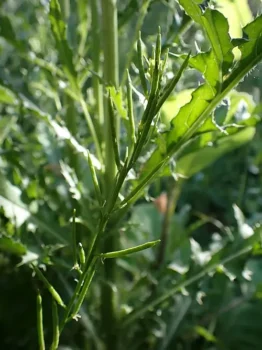
American Yellowrocket: A Hardy Native for Wet Gardens
If you’re looking for a tough, no-fuss native plant that thrives in those tricky wet spots in your garden, meet American yellowrocket (Barbarea orthoceras). This cheerful biennial might not win any beauty contests, but it’s a workhorse that brings early-season color and valuable wildlife habitat to challenging garden conditions.
What is American Yellowrocket?
American yellowrocket is a native North American biennial that belongs to the mustard family. You might also see it listed under its synonyms Barbarea americana or Barbarea orthoceras var. dolichocarpa in older gardening references. As a biennial, this plant has a two-year life cycle—it grows vegetatively in its first year and flowers, sets seed, and completes its cycle in the second year.
Where Does It Naturally Grow?
This adaptable native has one of the most impressive natural ranges you’ll find. American yellowrocket calls home a vast territory spanning from Alaska down through Canada and into the northern United States. You’ll find it naturally occurring in Alberta, British Columbia, Alaska, Manitoba, New Brunswick, Ontario, Quebec, Saskatchewan, Yukon, and the Northwest Territories. In the U.S., it grows in Arizona, California, Colorado, Idaho, Maine, Michigan, Minnesota, Montana, Nevada, New Hampshire, New Mexico, Oregon, South Dakota, Utah, Washington, Wisconsin, Wyoming, and even extends into Labrador and Newfoundland.
- Species observed
- No observations
Why Consider American Yellowrocket for Your Garden?
Here’s where American yellowrocket really shines—it’s practically bulletproof in wet conditions where many other plants struggle or fail entirely. This plant has different wetland classifications depending on your region, but the story is consistent: it loves moisture. In the Great Plains, Midwest, and Northcentral & Northeast regions, it’s classified as an Obligate Wetland plant, meaning it almost always occurs in wetlands. In Alaska, the Arid West, and Western Mountains regions, it’s considered Facultative Wetland, usually preferring wet spots but tolerating drier conditions.
Perfect Spots for American Yellowrocket
This native is ideal for:
- Rain gardens and bioswales
- Wet meadow plantings
- Pond and stream edges
- Low-lying areas that stay moist
- Wetland restoration projects
- Naturalized landscape areas
Flowers and Pollinator Appeal
Don’t expect showy blooms, but do expect helpful ones. American yellowrocket produces small, bright yellow flowers arranged in terminal clusters during late spring to early summer. These modest flowers are surprisingly valuable to early-season pollinators, including small native bees and beneficial flies that are active when many other plants haven’t started blooming yet.
Growing Conditions and Care
American yellowrocket is remarkably easy to grow if you can provide its preferred conditions:
Sunlight: Full sun to partial shade—quite adaptable
Soil: Consistently moist to wet soils; tolerates seasonal flooding
Hardiness: Extremely cold-hardy, suitable for USDA zones 2-7
Maintenance: Virtually none once established
Planting Tips
The easiest way to establish American yellowrocket is through direct seeding in fall. The seeds need a cold stratification period over winter to germinate properly in spring. Simply scatter seeds in your chosen wet area in late fall and let nature do the work. Once established, this plant readily self-seeds, creating natural colonies over time.
Is American Yellowrocket Right for Your Garden?
Consider American yellowrocket if you have consistently moist to wet areas that challenge other plants. It’s not the plant for formal gardens or dry conditions, but it’s perfect for naturalized landscapes, ecological restoration, and creating wildlife habitat. Its early blooms provide crucial nectar when pollinators need it most, and its ability to thrive in challenging wet conditions makes it invaluable for rain gardens and wetland plantings.
While it may not be the showiest plant in your garden, American yellowrocket earns its place through reliability, native status, and ecological benefits. Sometimes the best garden plants are the ones that simply do their job well, year after year, without any fuss—and that’s exactly what you’ll get with this hardy native.