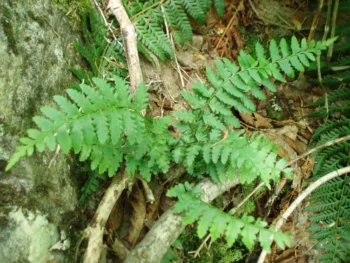
Anderson’s Hollyfern: A Pacific Northwest Native for Shady Gardens
If you’re looking to add some evergreen elegance to your shade garden, Anderson’s hollyfern (Polystichum andersonii) might just be the perfect native plant you’ve been searching for. This beautiful Pacific Northwest native brings year-round structure and that classic fern charm that makes woodland gardens feel truly magical.
What Makes Anderson’s Hollyfern Special?
Anderson’s hollyfern is a perennial fern that’s native to some of the most spectacular landscapes in North America. Unlike many garden plants that fade away in winter, this evergreen beauty keeps your garden looking lush even when everything else has gone dormant. Its dark green fronds create an elegant backdrop that complements both native wildflowers and traditional shade perennials.
You might also see this plant listed under its scientific synonym, Polystichum braunii ssp. andersonii, but don’t let that confuse you – it’s the same wonderful fern!
Where Anderson’s Hollyfern Calls Home
This native gem naturally grows across the Pacific Northwest, including Alaska, British Columbia, Idaho, Montana, Oregon, and Washington. It’s perfectly adapted to the cool, moist conditions that characterize this region’s forests and woodlands.
- Species observed
- No observations
Why Choose Anderson’s Hollyfern for Your Garden?
There are several compelling reasons to consider adding this native fern to your landscape:
- Native plant benefits: As a true native, it supports local ecosystems and requires less maintenance once established
- Year-round interest: The evergreen fronds provide structure and color even in winter
- Low maintenance: Once established, it’s quite self-sufficient in the right conditions
- Perfect for difficult spots: Thrives in shady areas where many other plants struggle
- Wildlife habitat: While it doesn’t attract pollinators like flowering plants, it provides shelter and habitat for small woodland creatures
Ideal Growing Conditions
Anderson’s hollyfern is happiest when you can replicate its natural woodland habitat. Here’s what it needs to thrive:
- Light: Partial to full shade – avoid hot afternoon sun
- Soil: Moist, well-draining soil rich in organic matter
- Moisture: Consistent moisture is key, but avoid waterlogged conditions
- Climate: Hardy in USDA zones 4-8, perfect for cooler climates
- Humidity: Appreciates higher humidity levels typical of woodland settings
Perfect Garden Settings
This versatile fern works beautifully in several garden styles:
- Woodland gardens: A natural choice for naturalized forest-like settings
- Shade gardens: Adds texture and evergreen structure to shady borders
- Native plant gardens: Essential for authentic Pacific Northwest landscapes
- Rock gardens: Works well in shaded rocky areas with good drainage
Planting and Care Tips
Getting Anderson’s hollyfern established is fairly straightforward if you follow these guidelines:
- Best planting time: Spring, after the last frost
- Site preparation: Amend soil with compost or leaf mold for better drainage and nutrition
- Watering: Keep consistently moist but not soggy, especially during the first growing season
- Mulching: Apply a layer of organic mulch to retain moisture and suppress weeds
- Fertilizing: Generally unnecessary in rich, organic soil
- Winter care: The evergreen fronds may look a bit tattered by spring – simply trim them back to make room for new growth
A Few Things to Keep in Mind
While Anderson’s hollyfern is generally easy to grow, there are a few considerations:
- It prefers cooler, more humid conditions and may struggle in hot, dry climates
- Like all ferns, it doesn’t produce flowers, so it won’t attract pollinators directly
- It may take a season or two to fully establish, so be patient with initial growth
The Bottom Line
Anderson’s hollyfern is an excellent choice for gardeners in the Pacific Northwest who want to embrace native plants and create beautiful, low-maintenance shade gardens. Its evergreen nature, ease of care, and natural beauty make it a valuable addition to any woodland or shade garden setting. Plus, you’ll be supporting local ecosystems by choosing a plant that’s perfectly adapted to your region’s unique conditions.
If you’re ready to add some native elegance to your shady spots, Anderson’s hollyfern just might be the perfect plant to help you create that magical woodland garden you’ve been dreaming of!