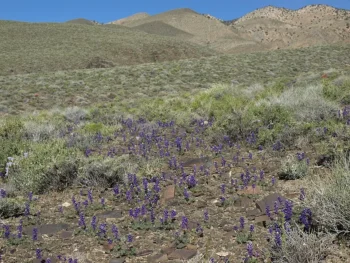
Anderson’s Lupine: A Desert Native That’s Perfect for Water-Wise Gardens
If you’re looking to create a stunning, low-maintenance garden that celebrates the natural beauty of the American Southwest, Anderson’s lupine (Lupinus andersonii) might just be your new best friend. This charming perennial wildflower brings all the classic lupine appeal—those gorgeous purple-blue flower spikes—while being perfectly adapted to thrive in challenging, dry conditions.
Meet Anderson’s Lupine
Anderson’s lupine is a native perennial forb, which is just a fancy way of saying it’s a non-woody flowering plant that comes back year after year. Unlike its tree and shrub neighbors, this lupine stays herbaceous, putting its energy into producing those show-stopping flower displays rather than building woody stems.
You might occasionally see this plant listed under its scientific synonym Lupinus rinae, but don’t let that confuse you—it’s the same wonderful species.
Where Anderson’s Lupine Calls Home
This lupine is a true child of the American West, naturally occurring in California and Nevada. It’s perfectly adapted to the unique challenges of these regions, from intense summer heat to sporadic rainfall patterns.
- Species observed
- No observations
Why Your Garden Will Love Anderson’s Lupine
There are plenty of reasons to fall in love with this native beauty:
- Drought tolerance: Once established, it thrives with minimal water—perfect for xeriscaping
- Pollinator magnet: Native bees, butterflies, and other beneficial insects absolutely love the nectar-rich flowers
- Low maintenance: Being native means it’s already adapted to local conditions
- Beautiful blooms: Those classic lupine flower spikes in purple-blue shades are simply stunning
- Attractive foliage: The silvery-green leaves provide lovely texture even when not in bloom
Perfect Garden Settings
Anderson’s lupine shines in several garden styles:
- Native plant gardens
- Xeriscapes and drought-tolerant landscapes
- Desert-themed gardens
- Naturalized wildflower meadows
- Pollinator gardens
Growing Conditions That Make It Happy
Success with Anderson’s lupine comes down to mimicking its natural habitat:
- Sunlight: Full sun is essential—this plant loves basking in bright light
- Soil: Well-draining sandy or rocky soils work best; avoid heavy clay that holds water
- Water: Drought tolerant once established, but appreciates occasional deep watering during extreme dry spells
- Climate: Thrives in USDA hardiness zones 8-10
Planting and Care Tips
Getting Anderson’s lupine established is straightforward if you follow a few key guidelines:
- Best planting time: Fall planting from seed works wonderfully, allowing natural winter stratification
- Soil prep: Ensure excellent drainage—amend heavy soils with sand or gravel if needed
- Watering: Water regularly the first year to establish roots, then reduce to occasional deep watering
- Maintenance: Minimal care required once established; deadhead spent flowers if you want to prevent self-seeding
Wildlife and Ecosystem Benefits
Beyond its beauty, Anderson’s lupine plays an important ecological role. The flowers provide crucial nectar for native pollinators, while the seeds can feed birds and small wildlife. As a member of the legume family, it also helps improve soil fertility by fixing nitrogen.
Is Anderson’s Lupine Right for Your Garden?
This native lupine is an excellent choice if you’re gardening in its natural range (California and Nevada) and want to create a water-wise, pollinator-friendly landscape. It’s particularly perfect for gardeners looking to reduce water usage while still enjoying beautiful blooms.
However, if you’re outside its natural range, you might want to explore lupine species native to your specific region instead. Every area has its own wonderful native lupines that are better adapted to local conditions!
Anderson’s lupine proves that native plants can be both practical and beautiful—offering stunning flowers while supporting local ecosystems and conserving water. It’s a win-win for both gardeners and the environment.